Why Your Grocery Cart Shapes Your Diet Better Than Your Willpower Does
The foods physically present in your home predict your eating behavior more reliably than motivation, and stocking three specific categories strategically changes outcomes without requiring more discipline.
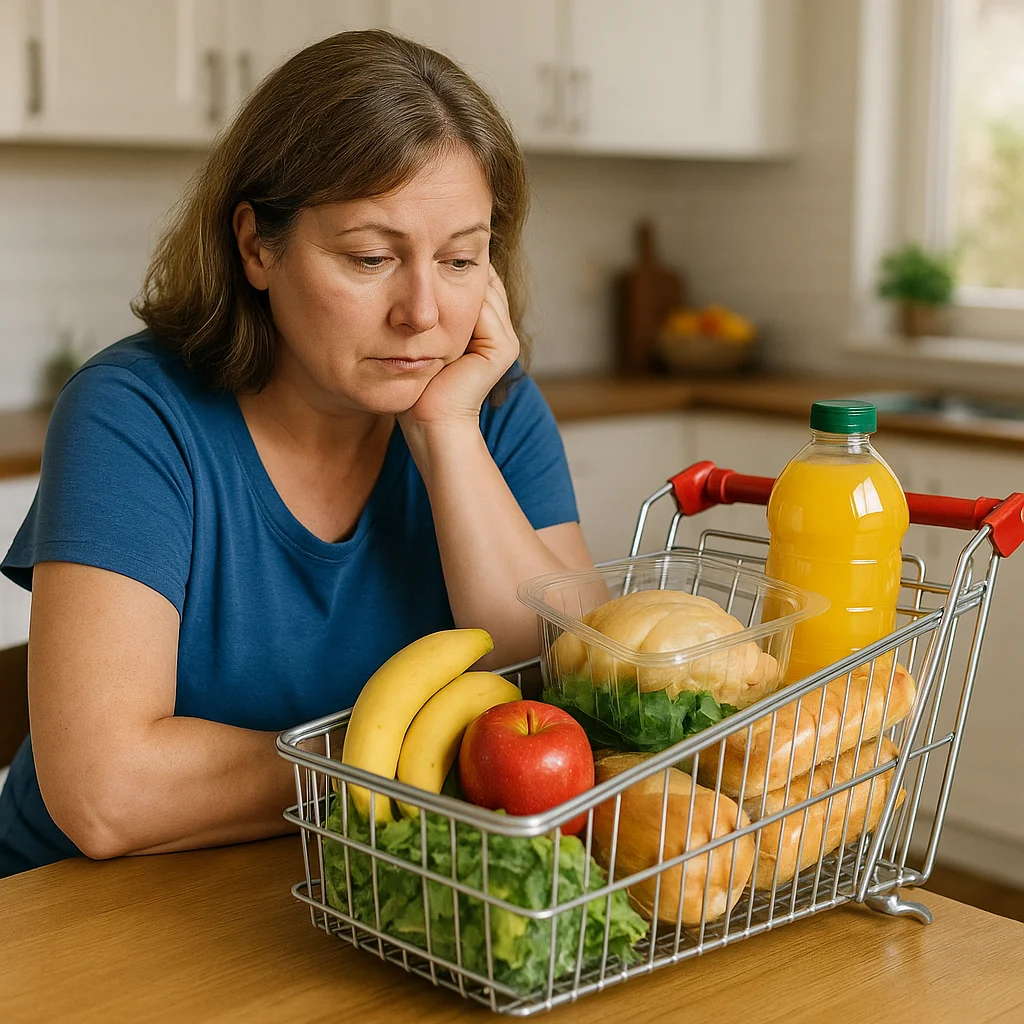
Most diet advice assumes you make food decisions in the moment, weighing options thoughtfully and choosing the best one. That is not how it actually works. By the time you are standing in front of an open refrigerator at 7 p.m., tired and slightly hungry, the decision was already made hours earlier at the store. Your kitchen inventory is your real diet plan.
This is not a criticism. It is actually good news, because it means one weekly errand carries more fat-loss leverage than days of trying to resist what is already in the house.
Why Environment Beats Intention
Hunger increases impulsive food choices. Fatigue does the same. When both hit at once, which is most weekday evenings, the food that requires the least effort to prepare and eat is almost always what gets eaten. If that food is leftover takeout and a bag of crackers, that is what you eat. If it is a cooked grain, some protein, and cut vegetables, that is what you eat instead.
Neither choice required more or less willpower. The choice was determined by what was available and how accessible it was.
Shopping strategically means designing your home food environment so that the low-effort path and the reasonably healthy path point in the same direction.
Three Categories Worth Prioritizing
You do not need a rigid list or a complicated system. You need reliable coverage in three areas that consistently trip people up: fast protein, volume vegetables, and a starchy anchor.
Fast protein is anything that requires fewer than five minutes to get from the fridge to a plate. Hard-boiled eggs kept in the shell, rotisserie chicken, plain Greek yogurt, canned fish, cottage cheese, and pre-sliced deli turkey all qualify. These are not glamorous, but they serve a critical function: they let you build a filling meal when you have no energy to cook. Without fast protein on hand, high-hunger moments almost always end in high-carbohydrate snacking, which is not inherently bad but does tend to leave people hungry again in 90 minutes.
Volume vegetables are raw or pre-cooked vegetables you can eat in large amounts without meaningfully affecting your calorie intake. Baby carrots, cucumber slices, cherry tomatoes, pre-washed salad greens, frozen broccoli, and frozen cauliflower all work. The value here is physical fullness. Eating a large volume of food activates stretch receptors in your stomach that contribute to the feeling of being satisfied. When you have these available and accessible, not buried under other things in the crisper drawer, they become the natural companion to everything else.
A starchy anchor gives meals staying power. This could be cooked brown rice kept in the fridge, a batch of boiled potatoes, frozen edamame, or a bag of whole grain bread. The goal is to have something that keeps you full for three or more hours, so hunger does not return before you have had a chance to do something other than eat. People who skip this category often end up grazing continuously through the evening, consuming more total calories than a single structured meal would have provided.
The Friction Principle
Accessibility matters as much as availability. A bag of almonds behind four other things in a cabinet is functionally less available than a bag of almonds in a bowl on the counter. A washed and cut bell pepper in a clear container at eye level in the fridge is more likely to get eaten than a whole bell pepper in the drawer below.
Apply this same logic in reverse to foods that tend to derail you. Buying them less often is the most effective step. But if they are in the house, storing them out of direct sight creates a small amount of friction that, for many people, is enough to interrupt automatic reaching.
This is not about banning foods or creating forbidden categories. It is about understanding that out-of-sight genuinely does reduce how often something gets eaten, and using that fact deliberately.
Budget-Friendly Shopping That Still Works
Strategic stocking does not require a large grocery budget. Frozen vegetables are nutritionally comparable to fresh and often cost significantly less. Canned fish is one of the most affordable high-protein options available. Dry lentils and canned beans are inexpensive starchy anchors that store for months. Eggs remain one of the lowest-cost protein sources per gram.
A practical approach for a limited budget is to choose one item from each of the three categories that you can buy in bulk or larger quantity, prepare in one session, and use across four or five meals. A dozen hard-boiled eggs, a large bag of frozen broccoli, and a batch of cooked rice prepared on the same day covers a meaningful portion of the week at low cost and low effort.
What to Do Before You Shop
The most useful step happens before you go to the store. Spend two minutes looking at what you already have and identifying the gap. If you have protein and a starchy anchor but no volume vegetables, the priority is clear. If you have vegetables but nothing fast to eat with them, fast protein is what you actually need.
This is more practical than following a pre-written shopping list that does not account for what is already in your refrigerator. It also reduces waste and keeps the weekly grocery run to what is actually missing.
The Honest Tradeoff
This approach requires one thing that willpower does not: a regular, deliberate shopping trip. For most people that means once or twice a week. If your schedule makes that difficult, identifying one or two shelf-stable or frozen items that can serve as backup for each category means you are rarely caught with nothing useful in the house.
You will still have hard evenings. You will still sometimes reach for something that was not part of the plan. But when the baseline of what is available shifts, the floor of what you eat on difficult days shifts with it. That accumulates into real results over weeks and months, without requiring you to be a different, more disciplined person every single day.