Why Freezing Your Meals Ahead May Do More for Fat Loss Than the Meals Themselves
Batch cooking and freezing specific meal types removes the three decision points where most diets quietly collapse, producing better results than any single food choice.
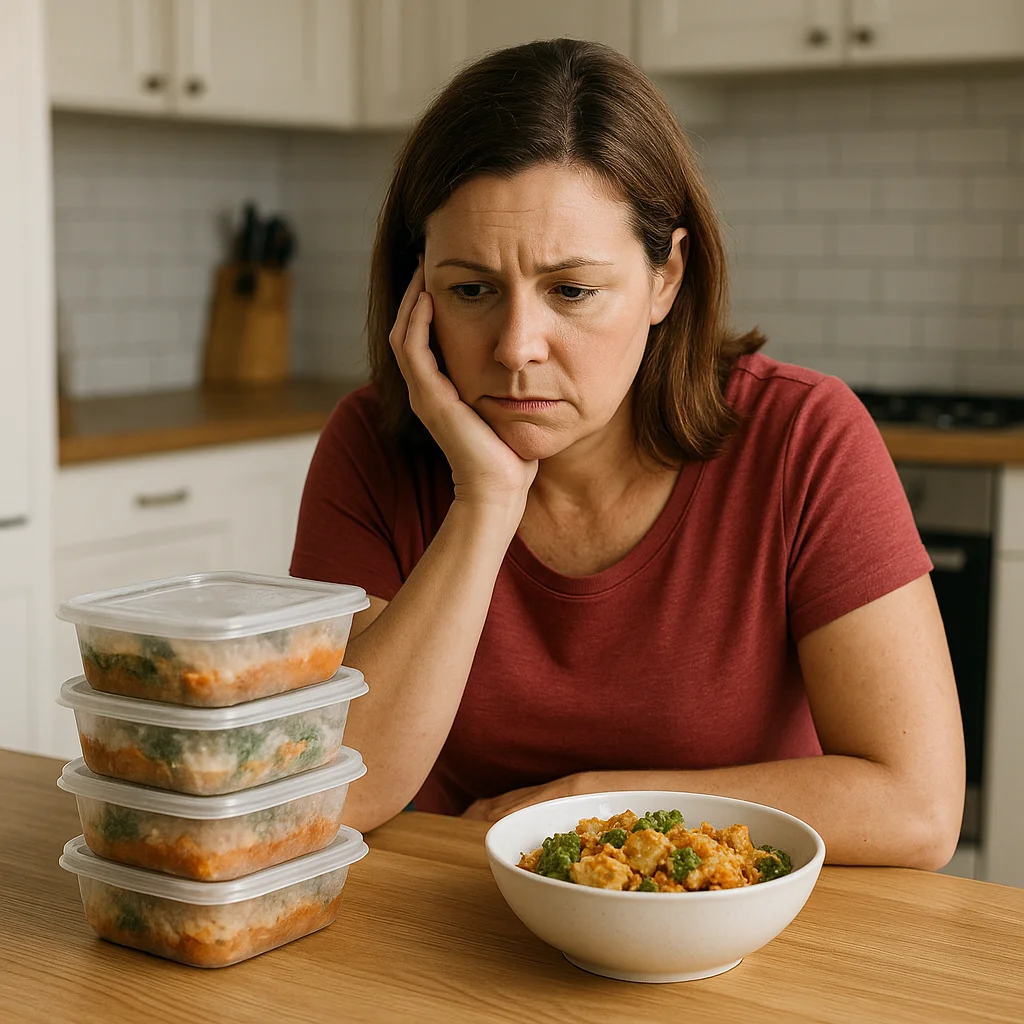
Most diet advice focuses on what to eat. Very little focuses on the moment your plan actually breaks down, which is almost never at the grocery store on a calm Sunday morning. It breaks down at 6:45 on a Tuesday when you are tired, the fridge looks empty, and delivery is three taps away.
Freezing meals ahead is often framed as a convenience habit. It is actually a decision-architecture habit, and that distinction matters a great deal for fat loss.
The Three Moments Where Diets Actually Fail
Research on eating behavior consistently points to a small number of high-risk situations: arriving home very hungry, facing a blank kitchen after a long day, and feeling too depleted to prepare something that takes real effort. These are not character failures. They are predictable collisions between a tired brain and an environment that requires decisions.
When willpower is at its lowest, your brain defaults to whatever path has the fewest steps. If that path leads to a frozen home-cooked meal that takes four minutes to heat, that is what you eat. If it leads to a bag of crackers or an order of something fried, that is what you eat instead. The food in your freezer is not just food. It is a pre-made decision you left yourself when you were in a better state to make it.
Freezing meals effectively addresses three specific collapse points: the empty-fridge moment, the fatigue-driven effort calculation, and the overchoice paralysis that leads to snacking through a meal instead of eating one.
What Actually Freezes Well for Fat Loss Goals
Not every healthy food freezes equally. Knowing which categories hold up well is the practical core of this approach.
Protein and legume bases freeze exceptionally well. Cooked chicken thighs, ground turkey, lentils, black beans, and chickpeas all reheat without significant texture loss and hold their satiety value. These are the components most people skip when cooking from scratch on a weeknight, and they are precisely the components that determine whether a meal keeps you full for two hours or five.
Soups and stews are the most forgiving category. A large pot of vegetable and bean soup, a turkey and lentil stew, or a simple chicken and vegetable broth-based dish freezes in individual portions and reheats in under ten minutes. These meals tend to be high in volume, which supports satiety through stomach stretch signaling, and relatively modest in calories.
Grain bowls, partially assembled, also work well. Cooking a large batch of brown rice, farro, or barley and freezing it in cup-sized portions means the slowest part of any bowl meal is already done. You add whatever vegetables and protein you have on hand, and a reasonably balanced meal comes together in the time it takes to microwave the grain.
What does not freeze as reliably: dressed salads, anything with high water content like cucumber or fresh tomato as a main component, creamy dairy-based sauces, and egg dishes beyond hard-boiled eggs. These are better kept as same-day items.
The Portion and Label Step Most People Skip
Freezing a large batch in one container solves one problem and creates another. When you open a container of unlabeled chicken and rice at 7 p.m. on Thursday, you do not know how much is a serving, how long it has been there, or what was in it.
The solution is simple but requires five extra minutes when you cook. Divide food into individual portions before freezing. Use inexpensive freezer-safe containers or zip bags. Write three things on each: what it is, roughly when you made it, and an approximate calorie estimate if you are tracking. Most meals stay at good quality for two to three months in a standard freezer.
This step matters for fat loss specifically because portion ambiguity is one of the most consistent contributors to underestimating intake. A pre-portioned container removes that variable without requiring you to weigh food at the moment you are hungriest.
How Often to Cook for the Freezer
The common advice is one big batch-cooking session per week. That works for some people and burns out others quickly, which is why the weekly-plan-to-Wednesday-failure pattern is so common.
A more durable approach is opportunistic doubling. Any time you cook a meal that freezes well, make twice as much. This requires almost no extra active time since most of the work is passive cooking. One batch of soup for tonight takes roughly the same hands-on effort as two batches. You eat one, you freeze the other.
Over three to four weeks of doing this consistently, most people accumulate enough variety in their freezer that they have a genuine fallback for almost any high-risk moment. The system builds itself without requiring a dedicated block of weekend time.
Realistic Expectations and Honest Tradeoffs
Freezing meals ahead does not make every meal perfect. Texture changes are real, and some people find reheated food less enjoyable. If that is you, focusing on soups, stews, and grain bases rather than full plated meals tends to minimize the problem because those formats are less texture-dependent.
It also does not eliminate the need to think about what you eat. A freezer full of homemade high-calorie casseroles does not produce the same result as one full of portioned soups and protein-forward stews. The approach works because it reduces friction at high-risk moments, not because frozen food has magical properties.
Budget-wise, batch cooking almost always reduces cost per meal compared to weeknight cooking from scratch or ordering in. Buying proteins and grains in larger quantities and using them across multiple portions typically lowers the per-serving cost meaningfully, which makes this one of the few fat-loss strategies that is also financially practical.
The Simple Starting Point
If you have never done this before, start with one thing this week: make a pot of soup or a batch of a protein you like, double the amount you would normally make, and freeze the second half in two or three individual portions before you eat the first half.
That is the whole entry point. You are not overhauling your kitchen or your schedule. You are leaving your future self a decision that has already been made well, ready to go at the worst moment of the day.