Why Liquid Calories Don't Register as Food (And the Simple Swap That Closes the Gap)
Your brain processes beverages through a fundamentally different satiety pathway than solid food, and understanding that gap points to three specific swaps that reduce daily intake without eating less.
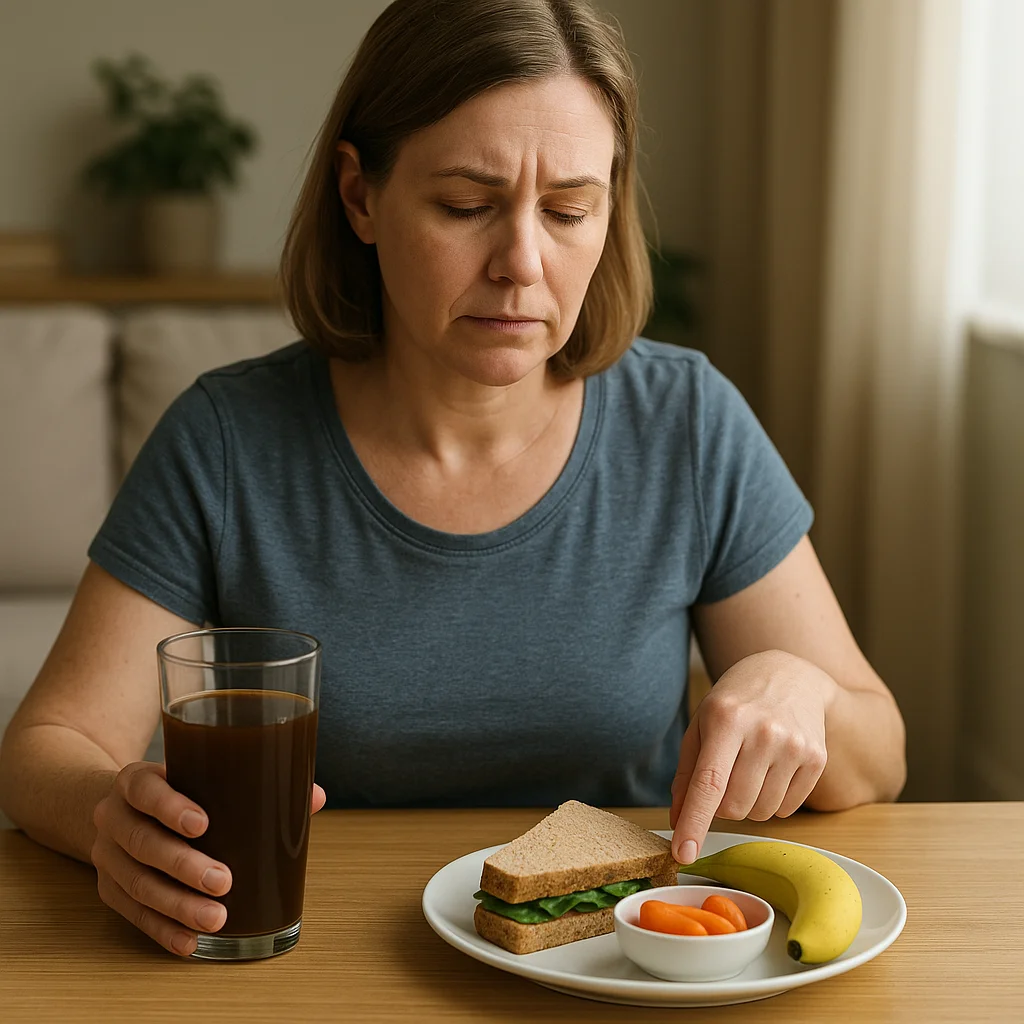
Most people tracking their diet do it carefully. They weigh chicken breasts. They measure salad dressing. They log everything that goes on a plate. Then they drink 400 calories of orange juice, a sweetened coffee, and a sports drink—and log none of it, or log it without expecting it to matter.
It matters. A lot. And the reason it's so easy to overlook isn't carelessness. It's biology.
Your Brain Has Two Satiety Systems, and Liquids Bypass the More Powerful One
When you eat solid food, your body triggers what researchers call oro-sensory and gastric satiation signals. Chewing starts the process—it tells your brain food is coming, activates saliva and digestive enzymes, and begins counting what's arrived. Then the physical bulk of food stretches your stomach walls, triggering stretch receptors that send a "getting full" message upward. Finally, nutrients slow their way through your digestive tract, releasing hormones like GLP-1 and peptide YY that sustain fullness for hours.
Liquids skip most of this sequence. They require little to no chewing. They move through your stomach quickly—often in 20 to 30 minutes versus 2 to 4 hours for solid meals. The stretch receptors barely activate because the volume doesn't linger. The result: your brain doesn't update its calorie ledger the same way.
Studies comparing matched calorie loads in liquid versus solid form consistently show that people who consume liquid calories eat more at their next meal—not less. The liquid calories don't subtract from appetite. They're largely invisible to the hunger system that governs how much you eat overall.
What This Costs You in a Typical Day
Consider a common but unremarkable Thursday for a dieter trying hard:
- 12 oz glass of orange juice with breakfast: ~165 calories
- 16 oz sweetened oat milk latte mid-morning: ~250 calories
- 20 oz sports drink during a lunchtime walk: ~130 calories
- A glass of wine with dinner: ~125 calories
Total liquid calories: roughly 670. That's a third of many dieters' entire daily calorie target, consumed in sips across the day, with essentially no impact on how hungry they felt at each meal.
For context, a 500-calorie daily deficit is the standard target for losing about one pound per week. Liquid calories of this scale can quietly neutralize that deficit entirely—not through cheating or giving up, but through a normal-seeming day.
The Three Swaps That Actually Work
You don't need to drink nothing but water forever. The goal is closing the satiety gap, not punishing yourself. Here's where the evidence points.
Swap 1: Replace juice with whole fruit.
Orange juice and a whole orange contain similar calories, but the outcomes diverge sharply. The orange brings fiber, requires chewing, takes up physical space in your stomach, and slows glucose absorption. The juice delivers the same sugar load in about 90 seconds, triggers a faster blood sugar rise, and leaves your hunger system unchanged. Studies comparing whole fruit to fruit juice consistently show lower subsequent calorie intake after the solid version. This single swap—orange juice to one orange—often saves 100 to 150 calories daily and, more importantly, those calories now count toward fullness.
Swap 2: Shift your coffee from a liquid meal to a drink.
Coffee itself is nearly calorie-free and has no meaningful satiety effect either way. The problem is what gets added. A 16 oz sweetened latte with oat milk or flavored syrup often carries 200 to 300 calories—all liquid, none registered by your hunger system. Swapping to black coffee, or a small amount of unsweetened milk, doesn't require loving black coffee. It requires treating the drink as a drink, not a meal. If you're genuinely hungry mid-morning, eat something solid alongside it. The solid food will register. The calorie-dense liquid won't.
Swap 3: Treat alcohol as a line item, not a beverage.
Alcohol presents a double problem. The calories themselves are real—7 calories per gram, metabolized preferentially before fat—but alcohol also lowers the inhibitory signals that regulate food intake. A single glass of wine before or with dinner reliably increases how much food people consume at that meal, independent of hunger. The wine calories don't register as fullness; they add to whatever you eat on top of them. Logging alcohol is a start, but the more effective move is treating it as a deliberate, planned choice rather than a default accompaniment to dinner. Two dry weeknights per week, on average, closes a meaningful gap for most people.
What About Diet Sodas and Zero-Calorie Drinks?
Fair question. The evidence here is genuinely mixed, but the practical answer is more useful than the debate.
Zero-calorie beverages don't trigger the satiety problem described above—there's nothing for your hunger system to ignore. But some research suggests that highly sweet tastes, even without calories, can maintain preference for sweetness overall and influence eating behavior indirectly. The practical concern isn't that diet soda causes weight gain through some mysterious mechanism. It's that using it as a proxy for hunger management doesn't reliably work either. Water, sparkling water, unsweetened tea, and black coffee remain the most neutral choices.
A Note on Smoothies
Smoothies deserve their own mention because they're often treated as a health food that should support weight loss. A homemade smoothie with vegetables, some fruit, protein powder, and water or low-calorie liquid can absolutely fit into a smart diet plan.
But commercial smoothies, most protein shakes from cafes, and anything blended with full-fat nut butters, banana, dates, and coconut milk often carry 400 to 700 calories in a single cup—and they move through your digestive system faster than the equivalent solid ingredients would. Blending breaks down fiber structure, which reduces its bulking effect. If smoothies are part of your routine, tracking them carefully and treating them as meals—not drinks—is the move that matters.
The Practical Takeaway
You don't have to become someone who only drinks water. The goal is to stop giving liquid calories a free pass in your mental accounting and your biology.
Start with one honest week: log every beverage, including the ones that feel too small to matter, and calculate the total. Most people are surprised by what they find. Then target the single highest-calorie liquid in your day and make one substitution.
The biology isn't working against you here—it's just working as designed, in an environment full of drinkable calories that didn't exist a century ago. Understanding the mechanism is what makes the fix feel logical rather than like another arbitrary rule.