Why the Size of Your Eating Window Matters Less Than What Anchors Each End of It
The specific foods you eat at your first and last meals of the day shape hunger and fat storage more powerfully than how many hours sit between them.
Intermittent fasting got popular partly because it gave people a simple number to focus on: sixteen hours without eating, eight hours with. That clarity is genuinely useful. But most people who try it discover that the window size alone does not automatically produce the results they expected. The reason usually comes down to what is happening at the two meals that define that window, not the gap between them.
Your first meal and your last meal are the biological anchors of your day. Each one sends a distinct set of signals that shape what your hormones, your hunger, and your fat cells do for the hours that follow. Getting those two anchors right tends to matter more than obsessing over whether your window is eight hours or ten.
What your first meal is actually doing
When you eat your opening meal of the day, your body is coming out of its longest overnight fast. Insulin is low. Fat oxidation is at its daily peak for most people. The first thing you eat interrupts that state, which is not inherently bad, but it does matter what you interrupt it with.
A meal that is high in refined carbohydrates and low in protein or fiber spikes blood sugar quickly and then lets it fall. That fall tends to generate hunger signals within two to three hours, even if the meal was calorie-adequate. You are not imagining that hunger. It is a real physiological response to the glucose curve, not a failure of willpower.
A first meal anchored by protein and fiber produces a slower, flatter glucose curve. Satiety hormones stay elevated longer. The practical result is that you are genuinely less hungry mid-morning and early afternoon, which reduces the pressure on every subsequent food decision during your eating window.
This is not a magic combination. It is just that protein and fiber each signal fullness through separate pathways, and those pathways happen to overlap in a way that extends the feeling of satisfaction. You get more mileage out of the same calorie count.
What your last meal is actually doing
The closing meal of your window has a different job. By this point in the day, your body is winding toward sleep, and several things are shifting. Insulin sensitivity decreases in most people as evening arrives. Your body is preparing to drop cortisol and raise melatonin, and a large, carbohydrate-heavy meal late in the day can work against both of those processes.
This does not mean you must eat dinner at 4 p.m. or avoid all carbohydrates at night. The research on this is more nuanced than the headlines suggest. But it does suggest that what your last meal contains shapes how well your body transitions into overnight fat-burning mode.
A final meal that is moderate in calories, includes meaningful protein, and is not dominated by high-glycemic foods tends to support that overnight shift. Protein at the last meal also helps with something practical: it slows gastric emptying, which reduces the likelihood that you will be physically hungry before sleep. Late-night hunger that breaks your window is often a last-meal problem, not a discipline problem.
One concrete suggestion worth trying: if you regularly feel genuinely hungry two or three hours after your last meal, try increasing the protein content of that meal by roughly a quarter before assuming your window is too short or your calories are too low.
The anchor meal pattern in practice
Think of it this way. Suppose your eating window runs from 9 a.m. to 7 p.m. If your 9 a.m. meal is a pastry and coffee and your 7 p.m. meal is a large plate of pasta, you will likely spend much of that window managing hunger spikes and end the day with a significant glucose load entering a low-activity period. The ten-hour window itself is reasonable. The anchors are doing most of the damage.
Flip those anchors toward protein and fiber at 9 a.m. and a moderate, protein-anchored meal at 7 p.m., and the same ten-hour window tends to feel more manageable, not because of willpower but because the biological signals going into and out of that window are more stable.
You do not have to eat perfectly in between. The anchor effect is real and it persists across the day in a way that middle-of-the-day choices often do not.
What this means if you are not doing any formal fasting
This principle applies even if you have no eating window at all. If you eat from 7 a.m. to 10 p.m. like many people do, the first thing you eat in the morning and the last thing you eat at night still set the hormonal tone for the hours that bracket them. The window framing is just a useful way to think about it.
For practical purposes, the question to ask yourself is not "how long is my eating window?" It is "what is actually happening at the two meals that open and close my day?"
If you are struggling with hunger control, fatigue, or slow progress and you have already looked at total calories and sleep, the anchor meals are a reasonable next place to look. They are adjustable, they are relatively inexpensive to change, and the evidence for their influence on hunger hormones is solid enough to be worth a genuine two-week trial before drawing conclusions.
A practical starting point
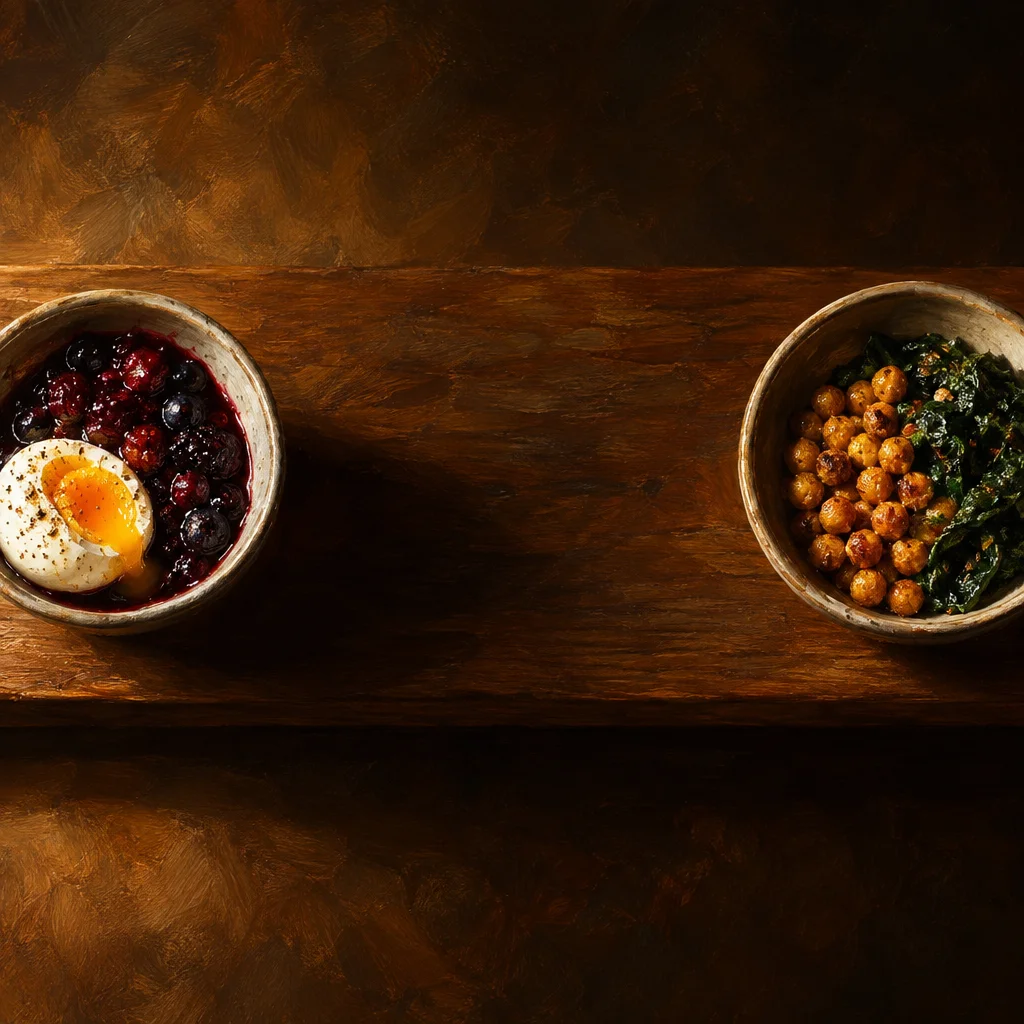
For your first meal, aim for at least 20 to 25 grams of protein and a meaningful source of fiber, from vegetables, legumes, or whole grains. This does not have to be elaborate. Eggs with vegetables, Greek yogurt with berries, or a bean-based dish all qualify.
For your last meal, keep the calorie load moderate rather than using it as the day's largest meal if you can, and include protein as the main event rather than a side note. This is a suggestion worth testing, not a rule.
The window you keep matters. But what you put at either end of it matters more than most fasting discussions acknowledge.