Why the Foods You Think of as Healthy Can Still Stall Your Weight Loss When You Eat Them Together
Certain combinations of individually nutritious foods can quietly push your total calories far beyond what your body needs to lose weight.
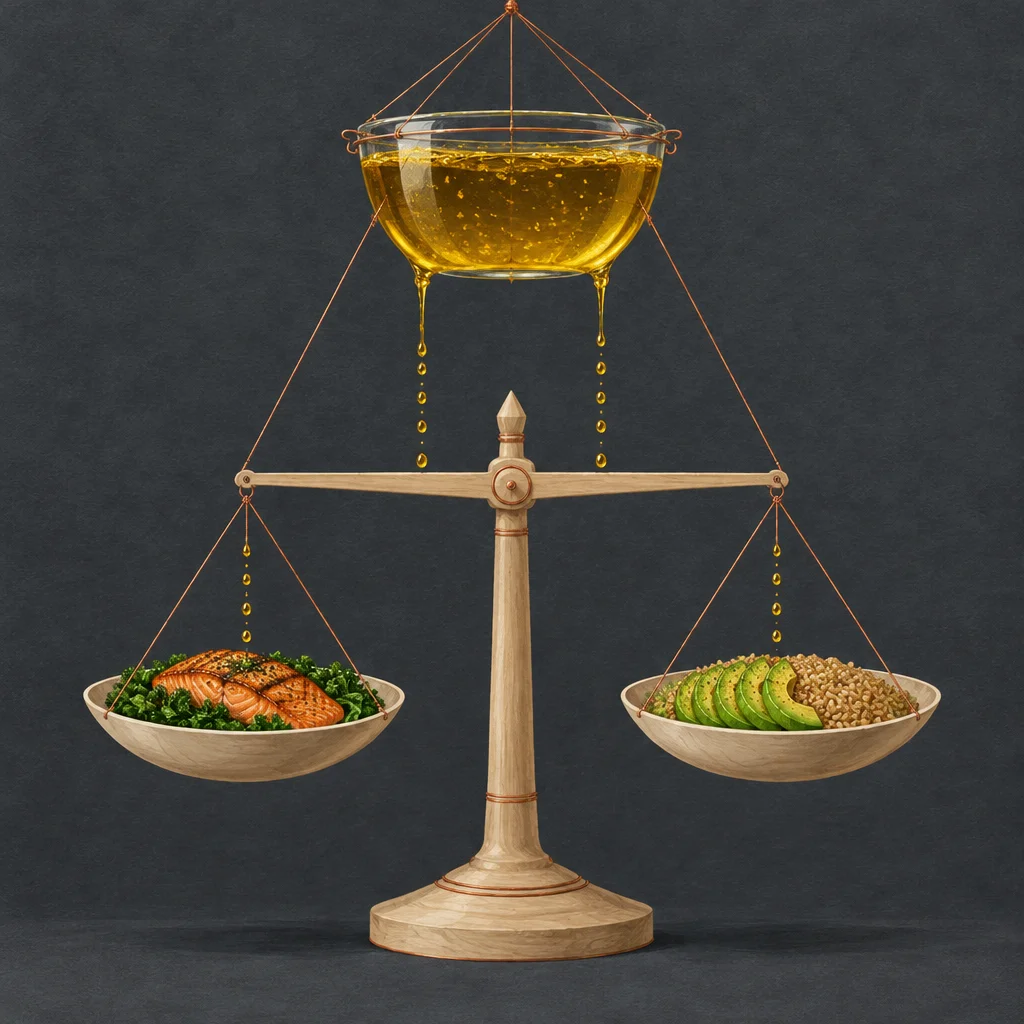
There is a particular kind of frustration that comes from eating well and still not losing weight. You are not touching fast food. You are not snacking on candy. Every item in your refrigerator has a reasonable reputation. And yet the scale is not moving.
This is one of the more common patterns that shows up when people switch to eating healthier foods, and it has a name worth understanding: calorie stacking from high-quality sources.
Why "Healthy" Does Not Mean "Low in Calories"
Some of the most nutritious foods available are also among the most calorie-dense. Nuts, olive oil, avocado, whole grains, legumes, full-fat dairy, and fatty fish are genuinely good for you. The research supporting them for long-term health is solid. But each of them delivers a meaningful number of calories in a small volume, and they are easy to combine in ways that add up faster than you would expect.
A lunch of salmon on a grain bowl with avocado, a drizzle of olive oil, and a handful of walnuts can easily reach 900 calories before you have added anything sweet or processed. None of those ingredients is a problem on its own. Together, in those quantities, they can represent more than half a day's calorie budget for someone aiming to lose weight steadily.
The foods are not the issue. The pattern of combining several dense foods in one sitting without accounting for their combined total is where things quietly go sideways.
The Specific Combinations That Tend to Catch People
A few pairings show up repeatedly when people start paying closer attention.
Fat plus fat. Cooking eggs in butter and then topping them with cheese and half an avocado is a common breakfast in low-carbohydrate eating plans. Each of those fats has nutritional merit. But fat delivers about nine calories per gram, which is more than double what protein or carbohydrates deliver per gram. When several fat sources share a plate, the calorie count climbs steeply before volume does, so you may not feel overly full even when you have eaten a lot.
Protein plus substantial sides. A large piece of grilled chicken is excellent. When it arrives next to a generous scoop of quinoa, a drizzle of tahini, and roasted vegetables finished in olive oil, the meal can easily exceed what the protein alone would suggest. The protein is doing the right job. The accumulation around it is where the total grows.
Smoothies and bowls. Blended or assembled meals tend to hide their calorie content because they do not look like much volume. A smoothie with oat milk, two tablespoons of almond butter, a banana, protein powder, and a handful of spinach is genuinely nutritious. It is also likely to be 500 to 600 calories, sometimes more depending on quantities, which is a full meal's worth of energy in liquid form that your fullness signals may not register clearly.
What to Do With This, Practically
None of this means removing these foods from your diet. The goal is not to eat less nutritiously. The goal is to notice when a meal is combining several dense foods and to make a small, deliberate adjustment before the pattern repeats daily.
Pick an anchor for each meal. Decide before you build the meal whether the main calorie source will be a fat or a carbohydrate. If the fat is the feature (avocado, nuts, oil-based dressing, fatty fish), let the rest of the plate be protein and vegetables without a second significant fat source. If the carbohydrate is the feature (grain, legume, starchy vegetable), keep added oils light and skip the extra nut or cheese layer on top.
Weigh oils at least occasionally. Oils are the single most underestimated source of hidden calories in home cooking because they are poured rather than scooped. A tablespoon of olive oil is about 120 calories. Two tablespoons used in cooking, plus a small drizzle finishing the dish, is easy to do without noticing. Measuring a few times helps you develop an accurate visual sense of what a tablespoon actually looks like in your pan or on your food.
Treat nuts and nut butters as a serving, not a topping. A handful of almonds is often described as a healthy snack, which it is. A handful scattered over a salad that already contains cheese and an oil-based dressing is a second fat source on top of two others. Nuts are satisfying and nutrient-rich, and a measured portion used intentionally is great. The habit of adding them casually as a finishing touch is where extra calories sneak in.
Check smoothie and bowl totals once. If you eat a smoothie or grain bowl regularly, it is worth adding up the ingredients one time with a measuring cup and a rough calorie reference. You may find it is close to your expectations. You may find it is running 200 calories higher than you thought. Either way, you know, and knowing means you can adjust the rest of the day accordingly rather than wondering why progress has stalled.
A Note on Not Overcorrecting
The answer here is not to strip your meals down to plain vegetables and plain protein. That approach tends to last about two weeks before the monotony drives you back to less helpful patterns. The goal is sustainable, and sustainability requires meals that actually taste good.
The adjustment is usually small: one fewer fat source per meal, a measured pour instead of a free pour, a smaller portion of the grain when the protein is already substantial. Those kinds of adjustments do not change the experience of eating very much, but they can close a 200 to 400 calorie gap that has been quietly preventing progress.
If your diet looks genuinely clean and the scale has not moved in several weeks, this is a reasonable place to look before concluding that something more dramatic needs to change. Most of the time, the answer is not a new diet. It is a closer look at what is already on the plate.