Why Your Body Fights Harder to Keep the Last 10 Pounds Than It Did the First 30
Fat cells themselves—not just metabolism or willpower—actively resist being emptied past a certain threshold, and understanding the three specific cellular mechanisms behind that resistance points to concrete dietary and movement adjustments that can overcome it.
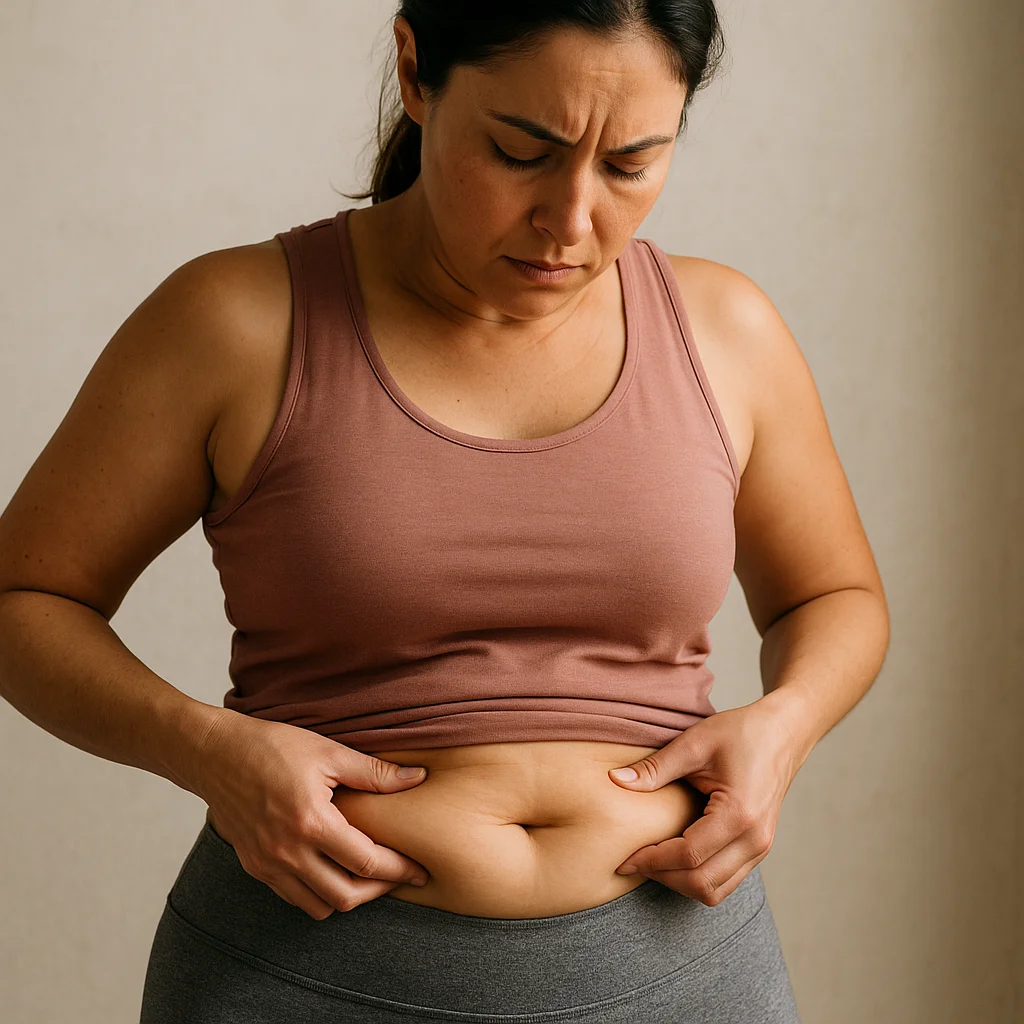
You've lost real weight. The scale moved, your clothes fit differently, people noticed. Then, somewhere in the final stretch, everything slows to a crawl despite doing the same things that worked before. Most explanations you've heard blame slowed metabolism or weakened willpower. Those factors exist, but they're not the whole story. The part that rarely gets explained involves the fat cells themselves—and once you understand what's happening inside them, the resistance makes biological sense and becomes something you can actually work around.
Fat Cells Don't Empty Equally
Your body stores fat in roughly 30 to 40 billion adipocytes—fat cells—and they do not behave uniformly. Early in a weight-loss effort, the cells that are fullest release their stored fatty acids most readily. Think of squeezing a water balloon: the fuller ones empty with less pressure. But as those cells shrink toward their lower size range, the hormonal signal required to unlock further fat release increases substantially.
The specific molecule driving this is called HSL—hormone-sensitive lipase. HSL is the enzyme inside a fat cell that breaks triglycerides apart so they can leave the cell and be burned for fuel. Insulin suppresses HSL activity almost completely. Catecholamines—adrenaline and noradrenaline—activate it. The problem in the final stage of fat loss is that smaller, partially depleted fat cells have fewer beta-adrenergic receptors, the docking sites catecholamines use to signal the cell. Less signal gets through. The same hormonal environment that once unlocked fat release now produces a noticeably weaker response.
Practical translation: the dietary and exercise approaches that worked at the start need a specific adjustment in the final phase, not just more of the same.
The Insulin Sensitivity Trap
Here's a counterintuitive wrinkle. As you lose weight, your overall insulin sensitivity usually improves—a genuine health win. But improved insulin sensitivity also means your fat cells respond to smaller insulin spikes with proportionally greater suppression of HSL. A modest carbohydrate hit that barely registered earlier in your diet now quiets fat release more effectively.
This doesn't mean carbohydrates are the enemy. It means the distribution of carbohydrates across your day matters more than it did at higher body weight. Specifically, spreading carbohydrate intake more evenly—rather than concentrating it at any single meal—keeps insulin from spiking high enough to significantly block fat release for the hours following that meal.
A concrete target: aim for no single meal to exceed roughly 40–45 grams of net carbohydrate in the final phase of your loss effort. That's not a low-carb diet. It's a carbohydrate-smoothing approach. The total can stay the same; the distribution is what shifts.
The Alpha-Receptor Problem in Stubborn Fat
The third mechanism is localized and explains why certain deposits—lower abdomen, hips, lower back—resist until almost everything else has shifted. Fat cells in these regions have a higher ratio of alpha-2 adrenergic receptors to beta-2 receptors compared with cells elsewhere. Alpha-2 receptors, when activated by catecholamines, inhibit fat release rather than triggering it. The same adrenaline signal that mobilizes fat from your arms, face, and upper body actively slows release from those stubborn depots.
Nothing you do will fully override this genetic architecture. But blood flow matters here in a practical way. Fat release from a cell requires that liberated fatty acids be carried away by circulating blood. Poor local blood flow means fatty acids get re-esterified—stuffed back into the cell—before they can reach muscle tissue to be burned. This is where specific movement becomes relevant, not as a calorie-burning tool but as a circulation tool.
Walking, particularly at a brisk pace that elevates heart rate moderately (roughly 50–65% of your maximum), increases blood flow to subcutaneous fat tissue meaningfully more than sitting still. It doesn't need to be long. Two 15-minute walks per day, ideally one in a fasted state or at least three hours after a meal, measurably increases fatty acid clearance from stubborn depots compared to equivalent sedentary calorie restriction alone. The walk doesn't have to be intense. It has to be consistent and timed.
What to Actually Adjust
Three shifts address these three mechanisms directly.
First, smooth your carbohydrate distribution. Keep your daily carbohydrate total where it is, but cap individual meals at around 40 grams of net carbs. This keeps insulin from spiking high enough to shut down HSL for multi-hour windows. Practically, this usually means splitting what was a large evening starch portion into smaller amounts across two meals, or adding a protein source to breakfast that displaces some of the carbohydrate load.
Second, add a brief fasted window before your largest activity. You don't need an aggressive fast. Simply placing your most active movement—even a 20-minute walk—at least three hours after your last meaningful carbohydrate intake gives insulin enough time to fall back toward baseline, allowing catecholamines to activate HSL without heavy suppression. Morning movement before breakfast accomplishes this naturally for most people, but mid-afternoon works equally well if lunch was light.
Third, prioritize blood flow to stubborn areas through consistency over intensity. You don't need to run. You need to walk often enough that blood flow to subcutaneous fat tissue is elevated multiple times per day rather than once or never. Two walks of 10–20 minutes outperform one 40-minute session for this specific purpose, because each walk triggers a fresh catecholamine response and renewed blood flow to fat tissue.
The Honest Expectation
None of this produces dramatic acceleration. Fat loss from resistant depots is measured in weeks, not days, even when you execute perfectly. What these adjustments do is remove the specific biological barriers that are actively working against you—and that is the difference between a plateau that breaks and one that doesn't.
The final stretch is genuinely harder. Your body has real reasons for resisting, and those reasons are cellular and hormonal, not moral. Working with the biology rather than just adding more restriction is how the last stretch eventually closes.