Why Your Body Fights Harder Against the Last 15 Pounds Than the First 30
The final stretch of a weight-loss effort triggers three specific physiological responses—distinct from general metabolic adaptation—that explain why progress stalls close to goal, and targeting each one precisely can restart fat loss without eating less than you already are.
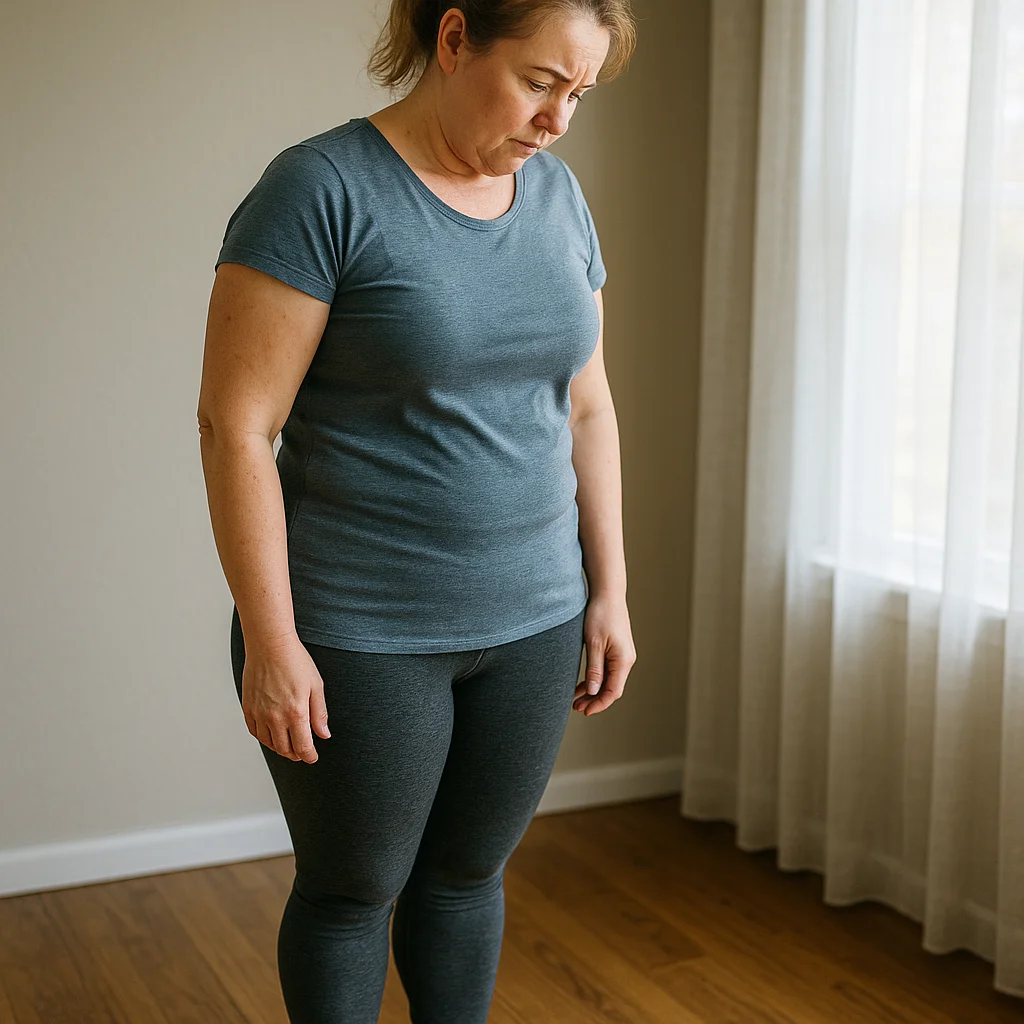
You did the hard part. You changed what you eat, you built the habit, and you lost meaningful weight. Then somewhere in the last 10 to 20 pounds, the whole thing stopped working. Same food. Same effort. Nothing moving.
This isn't a motivation problem. It's a biology problem—and a specific one. The closer you get to your goal weight, the more forcefully your body defends the remaining fat. Three distinct mechanisms switch on in the final stretch that don't operate the same way early in a diet. Knowing what they are tells you exactly where to push.
Mechanism 1: Your Energy Gap Gets Mathematically Smaller
At the start of a diet, a 500-calorie daily deficit is meaningful relative to your body weight. You were heavier, your resting metabolism was higher, and you were moving more mass through every step and movement. Fat loss happened faster partly because the math worked in your favor.
By the time you're 30 pounds lighter, your body burns fewer calories at rest and during activity—sometimes 200 to 350 fewer per day—simply because there's less of you to maintain. That same 500-calorie deficit you started with has quietly shrunk, perhaps to 150 or 200 calories, without you changing a thing.
This is not metabolic adaptation or dysfunction. It is straightforward physics. A lighter body requires less fuel.
What actually helps: Recalculate your calorie target using your current weight, not the weight you started at. Most people never do this. Use a basic TDEE calculator with your current body weight and activity level, set a 20% deficit from that number, and treat it as a new baseline. You almost certainly need to eat a bit less than you did six months ago—not because your metabolism is broken, but because you've already succeeded.
Mechanism 2: Leptin Drops to a Level That Actively Increases Hunger
Leptin is the hormone your fat cells release to tell your brain you have adequate energy reserves. The more fat you carry, the more leptin circulates, and the less hungry you feel at baseline.
As you lose fat—especially in the later stages—leptin levels drop. Your brain interprets this not as success, but as a threat. The hypothalamus responds by increasing hunger signals and reducing the spontaneous movement called non-exercise activity thermogenesis, or NEAT. You fidget less. You pace less. You take the elevator instead of the stairs without consciously deciding to.
Research tracking NEAT in dieters shows losses of 100 to 300 calories per day in spontaneous movement alone during active calorie restriction. In the final phase of a diet, when leptin is at its lowest, this suppression is at its strongest.
What actually helps: Two things move the needle here. First, deliberate movement that isn't structured exercise—standing while you work, walking while on calls, taking the long route—directly replaces what NEAT suppression is quietly stealing. Ten to fifteen minutes of intentional low-effort movement scattered through the day can recover most of that gap.
Second, a planned diet break of one to two weeks at maintenance calories—not a cheat period, a true maintenance period—partially restores leptin and reduces the hunger signal. Studies show measurable leptin recovery within two weeks of returning to maintenance. After the break, resume your deficit. Progress typically restarts.
Mechanism 3: Your Fat Cells in the Final Deposits Are Biologically Stubborn
Not all fat is metabolically equal. Early in fat loss, your body draws preferentially from visceral fat—the metabolically active fat around organs—because it releases fatty acids into circulation more readily. This is why early weight loss often comes faster than expected and why waist measurements can drop significantly before the scale moves as much.
Late-stage fat is different. Subcutaneous fat—the fat under your skin on thighs, lower abdomen, and arms—is more resistant to lipolysis, the process of breaking fat down for energy. It has fewer of the receptors that respond to fat-burning signals and more of the receptors that block them. It's the last hired, last fired in biological terms.
This is also the fat most people are frustrated by and most visible to them—which makes the late-stage stall feel personal and discouraging when it's actually structural.
What actually helps: Two levers matter here. Insulin suppression is one of the primary signals that allows lipolysis to proceed. Keeping insulin lower for more of the day—by spacing meals, reducing refined carbohydrate load, and not snacking between meals—creates longer windows where fat breakdown is biologically permitted. You don't need a ketogenic diet to accomplish this; a four-to-five hour gap between meals with minimal carbohydrate snacking does measurable work.
Resistance training is the second lever. Muscle tissue at rest draws fatty acids from circulation, including the stubborn subcutaneous stores. Heavier muscle tissue burns more fat between workouts. You don't need a gym for this—bodyweight exercises three days per week provide a meaningful stimulus.
The Honest Summary
The last stretch is harder because three real things are working against you simultaneously: your calorie math has changed and you haven't adjusted for it, leptin suppression is quietly eroding your movement and amplifying your hunger, and your remaining fat is biologically slower to release.
None of this means your body is broken or that your goal is out of reach. It means the strategy that got you here needs specific updates—not more willpower.
Recalculate your baseline. Add deliberate movement throughout the day. Consider a planned maintenance break. Lower your insulin signal for more of each day. Add some resistance work if you haven't.
These are not quick fixes. They're targeted responses to specific biology—which is exactly why they work.