Why the Scale Stalls in Winter (And the Three Biological Levers That Fix It)
Shorter days and colder temperatures trigger three measurable physiological changes—in light exposure, body temperature regulation, and activity pattern—that quietly expand appetite and shrink calorie burn, and targeting each one specifically can restart fat loss without eating less than you already are.
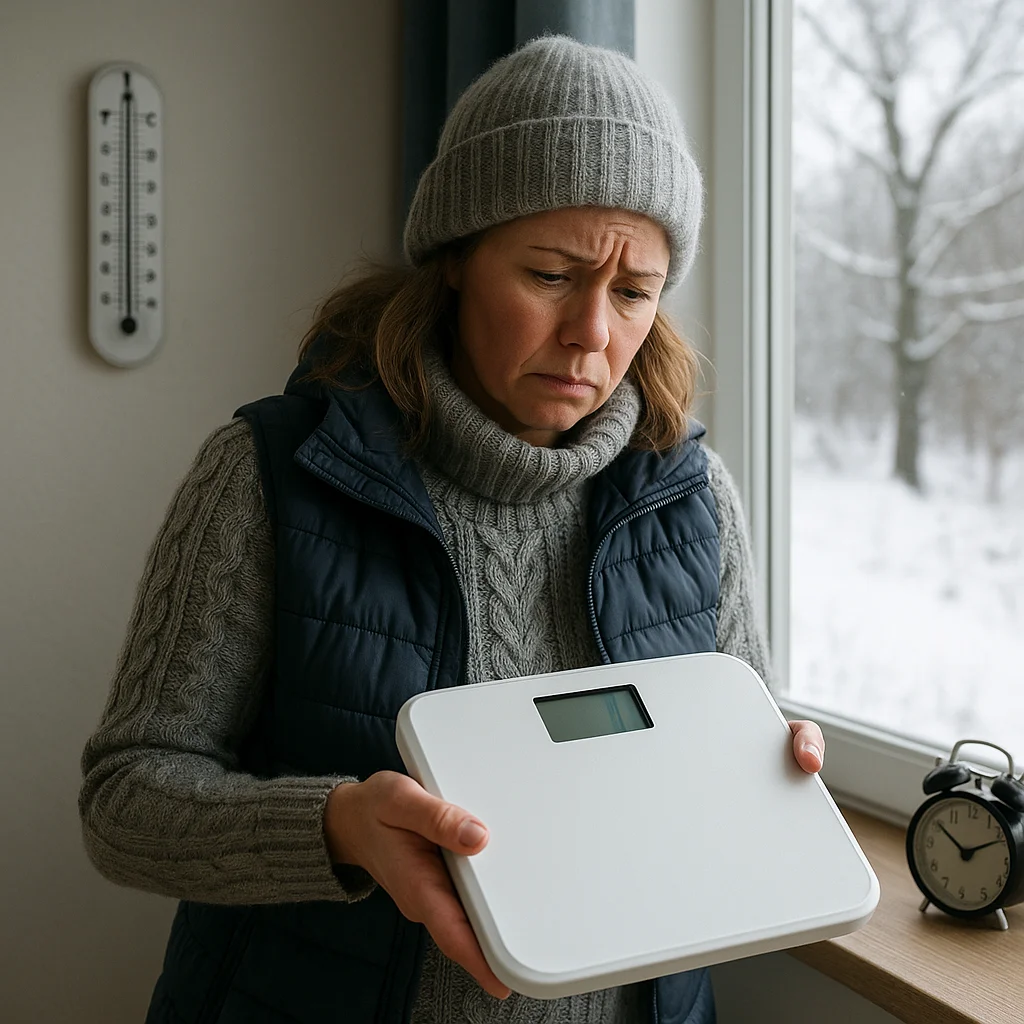
Every January, a predictable scene plays out in millions of households. The holiday eating is over. The resolve is real. The calories are reasonable. And yet the scale barely moves—or creeps upward despite genuine effort. Most people blame the lingering effects of December indulgence or their own inconsistency. The actual explanation is more interesting, and more useful.
Winter itself is working against you. Not as a metaphor. As biology.
Three specific, measurable physiological changes happen when daylight shortens and temperatures drop. Each one independently nudges your body toward storing fat and eating more. Together, they can easily account for a 200–400 calorie daily gap between what you think your body needs and what it actually does. That gap—not willpower, not holiday cookies—is why progress stalls.
Understanding exactly what's happening gives you three concrete places to push back.
Lever One: Light Exposure and Serotonin–Carbohydrate Drive
Light hitting your retinas is one of the primary inputs your brain uses to regulate serotonin production. Serotonin matters for weight loss for a reason most people don't hear: it directly modulates carbohydrate craving. When serotonin is low, the brain sends a specific, urgent signal for starchy and sweet foods—because carbohydrates temporarily boost serotonin. This is not a flaw. In an evolutionary context, it was a rational drive to increase calorie storage before a difficult season.
In winter, reduced daylight hours—particularly the loss of morning bright light—measurably reduce serotonin activity. The result is a persistent, biologically-driven pull toward bread, pasta, crackers, and sweets that feels emotionally driven but is neurochemically grounded.
The fix is straightforward, though underused: get bright light into your eyes within 30 minutes of waking. This means outdoor light when possible, even on overcast days (cloud cover still delivers 10–20 times more lux than indoor lighting). On genuinely dark mornings, a 10,000-lux light therapy lamp used for 20–30 minutes at breakfast delivers a measurable serotonin signal and reduces carbohydrate craving throughout the day in controlled research settings. This is not a mood supplement with uncertain weight effects—it's a documented appetite-regulation tool.
Lever Two: Cold and Non-Shivering Thermogenesis
Your body burns calories maintaining core temperature. That much is generally understood. What's less appreciated is the specific way mild cold—not extreme cold, just the ambient temperature of being indoors in winter with the heat on—shapes how your body allocates energy.
When you're warm and comfortable, brown adipose tissue (brown fat) goes largely dormant. Brown fat is metabolically expensive—its job is to generate heat by burning calories. Modern indoor heating removes the stimulus that keeps it active. Research comparing individuals in temperature-controlled versus mildly cool environments (around 66–68°F / 19°C versus 75°F / 24°C) consistently finds meaningfully higher resting calorie burn in the cooler condition—some studies show a 5–10% difference in daily energy expenditure. Over weeks, that compounds.
This is not an argument for being uncomfortably cold. It's a practical nudge: keeping your indoor temperature slightly cooler than maximum comfort, sleeping in a cool room, and taking brief cold exposure—a cool (not frigid) morning rinse, or regular outdoor walks in seasonal temperatures rather than avoiding them—maintains the thermogenic activity that indoor heating suppresses.
The outdoor walking point is particularly actionable. A 20-minute walk in 45°F weather burns meaningfully more calories than the same walk on a treadmill at 72°F, without adding a single minute of exercise. The cold itself is doing work.
Lever Three: Light-Driven Shifts in Melatonin and Insulin Sensitivity
This one operates on a slower cycle but has substantial fat-storage implications. Melatonin—the hormone most people associate only with sleep—also has direct effects on insulin sensitivity when its secretion window lengthens, as it does in winter. Specifically, melatonin suppresses insulin secretion from pancreatic beta cells. When melatonin is elevated for longer portions of the day (which occurs with shorter photoperiods), insulin sensitivity is reduced during those extended windows.
In practical terms: your body's ability to process carbohydrates efficiently is meaningfully worse in the early morning and evening hours during winter months compared to summer. Eating the same carbohydrate-heavy breakfast at 7 AM in January produces a higher and more prolonged blood sugar response than the identical meal in July, when morning melatonin has already cleared.
The targeted fix here is meal composition timing, not calorie reduction. Shifting the bulk of your carbohydrate intake to midday—when melatonin is lowest and insulin sensitivity is at its daily peak—and keeping morning and evening meals higher in protein and fat preserves the same total daily intake while substantially reducing the blood sugar and fat-storage signal those meals generate.
This isn't about eating less. It's about eating the same food in a sequence that matches your body's seasonal insulin rhythm.
Putting It Together Without Overhauling Your Life
These three levers can be addressed with specific, small-footprint changes:
Morning: 20–30 minutes of outdoor light or a light therapy lamp before or during breakfast. Breakfast composition shifts toward protein and fat (eggs, Greek yogurt, nuts) rather than cereal, toast, or fruit-forward smoothies.
Midday: This is your window for starches and higher-carbohydrate foods if you eat them. Lunch is where rice, whole grains, or legumes fit best from an insulin-timing standpoint in winter months.
Temperature: Set thermostats to the lower end of comfortable (68°F / 20°C rather than 72°F+). Keep the bedroom cooler at night—research on sleep quality and brown fat activation both point to 65–67°F as an optimal range. Don't skip outdoor walks because it's cold; the cold is part of the benefit.
Evening: Keep the meal protein-anchored and carbohydrate-modest. This aligns with both the elevated melatonin window and the well-documented protein satiety advantage for reducing late-night snacking.
None of this requires a new diet. It requires understanding that your body's operating environment changes with the season—and adjusting three inputs accordingly.
The scale stall most people blame on their own failure in January is frequently a biology problem with a biology solution. When you address light, temperature, and meal timing in the specific ways the underlying mechanisms call for, you're not working harder. You're working with the season instead of against it.