Why the Scale Stalls Even When You're Doing Everything Right (And the Two Levers That Actually Fix It)
A weight loss plateau is almost never caused by a broken metabolism—it's caused by two invisible calorie shifts that research consistently identifies, and fixing them requires measurement, not motivation.
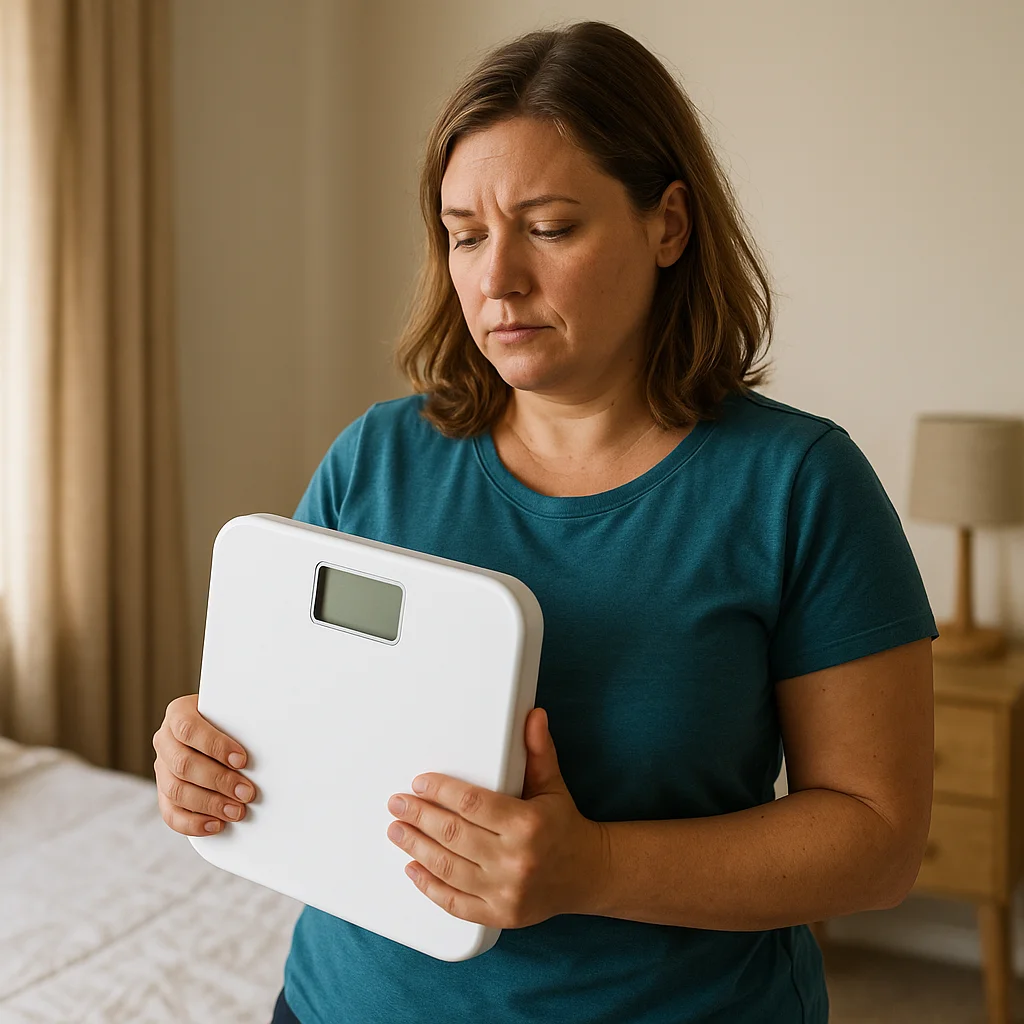
You've been consistent for weeks. You're eating the way you agreed to eat. You're walking. The scale hasn't moved in three weeks. The tempting explanation is that your metabolism has 'broken' or your body has 'adjusted' to your diet. That story feels true, but it's mostly not—and believing it leads people to do the wrong things.
Here's what's actually happening in the vast majority of plateaus, based on controlled research: the deficit closed. Not because your body suddenly became a calorie-burning miracle, but because of two specific, measurable shifts that happen quietly as you lose weight. Understanding them is the difference between spinning your wheels and getting moving again.
Invisible Shift #1: You Are Lighter Now
This one is straightforward and almost always overlooked. When you weigh less, everything costs less—walking, climbing stairs, digesting food, even sleeping. A person who started at 210 pounds and now weighs 190 pounds burns meaningfully fewer calories doing the exact same activities. No metabolic damage required. Physics.
Research published in obesity and metabolism journals consistently shows that for every pound of body weight lost, total daily energy expenditure drops by roughly 10–20 calories, depending on the individual. Lose 20 pounds and you may be burning 200–400 fewer calories per day than when you started—just from being smaller.
This is not a failure. It is expected. But it means the eating pattern that created a deficit at 210 pounds is now close to maintenance at 190 pounds. The gap closed automatically, and nothing went wrong. You just didn't adjust for the new reality.
The fix: Recalculate your estimated daily calorie needs at your current weight every 10–15 pounds lost. Free TDEE calculators give you a reasonable starting number. You don't need precision—you need a recalibration that reflects who you are now, not who you were at the start.
Invisible Shift #2: Portion and Habit Drift
This one is harder to admit but even more common. Studies using doubly labeled water—considered the gold standard for measuring real-world calorie intake—repeatedly show that people underestimate what they eat by 20–40%, even people actively trying to diet. Even dietitians. Even researchers who study this.
The drift happens in layers. The tablespoon of olive oil becomes a generous pour. The handful of nuts becomes two handfuls. The weekend 'relaxed eating' expands from Saturday dinner to Friday lunch through Sunday brunch. None of these moments feel like cheating. They feel like normal life. But collectively, they can close a 300-calorie deficit entirely without a single conscious decision to eat more.
This isn't a character flaw. It's how human eating works when we're not actively tracking. Attention to portion naturally loosens as the initial motivation wave fades—usually right around weeks four through eight, which is exactly when most plateaus show up.
The fix: A two-week return to deliberate tracking. Not forever—just long enough to see where the drift happened. Most people find one or two specific places where calories crept back in: liquid calories, cooking oils, snacks eaten while standing. Fix those spots specifically, rather than overhauling everything.
What About 'Metabolic Adaptation'—Is It Real?
Yes, but it's smaller than the internet suggests and rarely the primary cause of a plateau. Research does show that sustained calorie restriction causes adaptive thermogenesis—the body reduces energy expenditure slightly beyond what weight loss alone would predict. The effect is real.
But the magnitude matters. A careful meta-analysis of diet studies estimated adaptive thermogenesis accounts for roughly 100–200 extra calories per day in most adults—significant, but not the 500-calorie metabolic crater that diet culture mythology describes. The two invisible shifts above—smaller body, portion drift—typically account for far more of the gap.
Focusing primarily on metabolic adaptation leads people toward extreme interventions: crash diets, severe exercise ramps, or giving up entirely. None of those are necessary when the actual problem is a quietly closed deficit.
The Two-Step Plateau Protocol
When the scale stops for three or more weeks, work through this in order:
Step 1: Recalculate, then create a small intentional gap. Find your estimated calorie needs at your current weight. Aim to eat 150–250 calories below that number. Not 500. Not 1,000. Small, sustainable, survivable.
Step 2: Track for two weeks with actual measurements. Use a kitchen scale for at least the foods that carry the most caloric density in your diet—fats, grains, protein sources. You're not looking to be perfect; you're looking for the drift. Most people find it within a few days.
That's it. No metabolic reset protocols. No carb cycling. No fasting windows unless you already use them and enjoy them. Just closing the gap that quietly opened.
A Note on Patience as a Variable
Some plateaus have a third explanation: the scale is fine, and the body is in the middle of a fluid shift. Fat loss and water retention can coexist for one to three weeks, especially after a change in sodium intake, carbohydrate intake, or exercise. The scale reflects fluid balance as well as fat, and it lies in the short term.
If your clothes fit differently but the number hasn't moved, give it another week before concluding something is wrong.
The Honest Summary
Plateau frustration is real and discouraging. But treating it as evidence that your body is broken leads to bad decisions. In most cases, the math simply got even again—you're lighter, habits drifted, or both. Recalculate, measure briefly, and adjust by a modest margin.
The people who break through plateaus consistently aren't the ones with the highest willpower or the most aggressive plans. They're the ones who look at the numbers honestly, find the specific problem, and make the smallest change that fixes it.