Why the Order You Eat the Foods on Your Plate Changes How Much You Eat at That Meal
The sequence in which you eat vegetables, protein, and carbohydrates at a single meal measurably affects blood sugar, fullness signals, and total calories consumed.
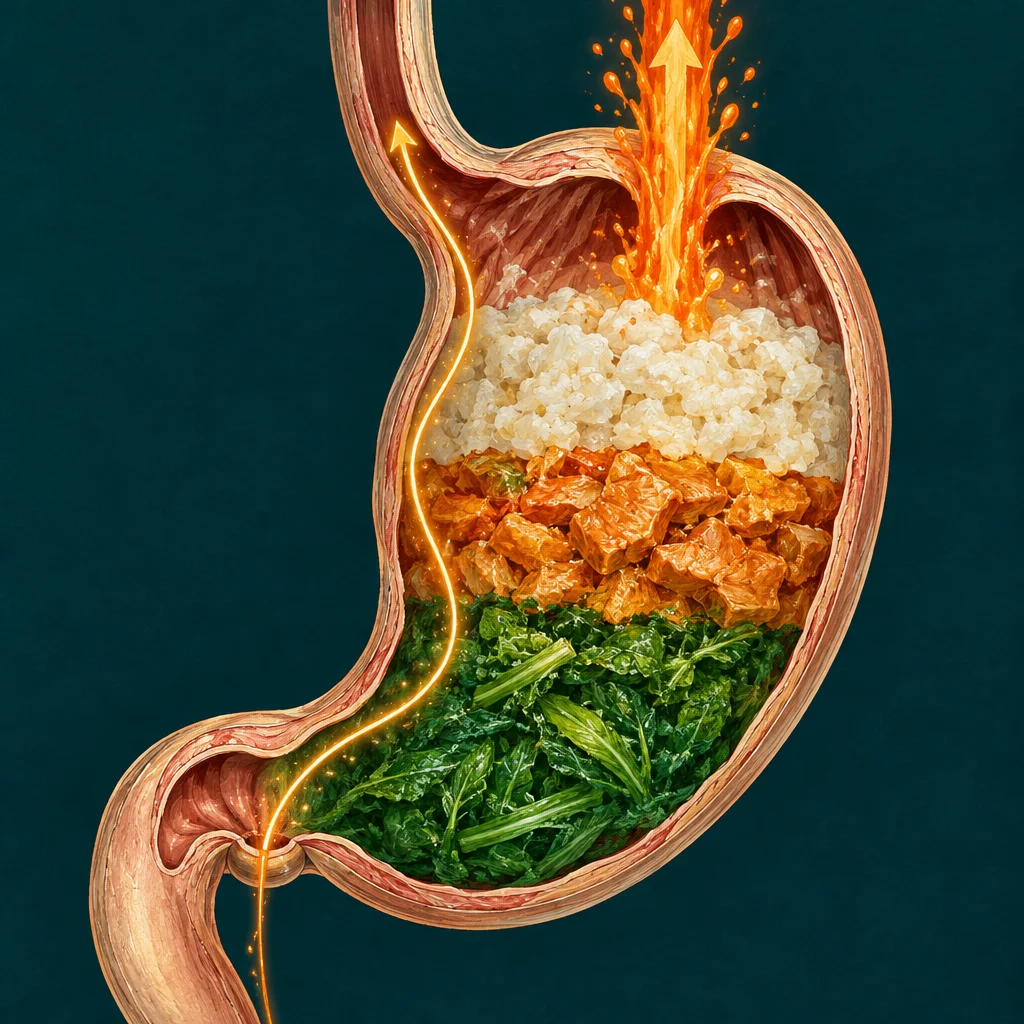
Most diet advice focuses on what you put on your plate. Very little focuses on the order you eat it in. That turns out to matter more than it sounds like it should, for reasons that are grounded in how digestion and appetite signaling actually work.
Here is the short version: your gut does not treat all foods equally as they arrive. The sequence in which different types of food reach your digestive system changes how quickly glucose enters your bloodstream, how fast certain fullness hormones rise, and how satisfied you feel before you reach for seconds. Adjusting the order costs nothing and requires no new groceries.
What Happens When Carbohydrates Arrive First
When you start a meal with bread, rice, pasta, or another starchy food, those carbohydrates begin breaking down almost immediately. They move into your small intestine quickly and push glucose into your bloodstream at a relatively fast rate. Your body responds with insulin, and the meal is underway.
The issue is timing. Fullness signals do not travel from your gut to your brain instantly. There is a lag of roughly 15 to 20 minutes between when your stomach and gut register a meal and when your brain receives a clear stop signal. If you front-load fast-digesting carbohydrates, you may eat a significant portion of your meal before the signals that would slow you down have had a chance to arrive.
That lag is not a flaw in your body. It is simply how the signaling system works. Understanding it lets you work with it.
Why Vegetables and Protein First Changes the Equation
Fiber, which is abundant in most vegetables, slows the rate at which the contents of your stomach empty into your small intestine. When fiber is present before starchy carbohydrates arrive, it physically moderates how fast those carbohydrates can be digested and absorbed. The practical result is a gentler, slower rise in blood glucose after the meal.
Protein has a similar moderating effect on stomach emptying, and it also stimulates the release of gut hormones that signal fullness. When protein and fiber are already present in your stomach before carbohydrates arrive, the conditions for a more gradual, sustained fullness are already set.
This means that a meal containing the exact same foods in the same amounts can produce a different experience depending on which foods you eat first. Eating your salad or roasted vegetables before your rice, and your chicken or beans before your bread, gives fullness signals more time to build before you reach the portion of the meal that is easiest to overeat.
A Practical Way to Think About It
Imagine a hypothetical dinner: a grilled chicken thigh, a side of roasted broccoli, and a cup of brown rice. The calories are the same regardless of order. But if you eat the broccoli first, then the chicken, then the rice, you arrive at the rice with some fullness already building. You may eat the full cup, or you may find that half a cup is genuinely enough. Either way, the choice comes from a different hunger state than if you had started with the rice.
This is not a trick or a rule to police yourself with. It is just giving your body's own signaling system a better chance to inform your decisions before the meal is finished.
What This Means for Common Eating Situations
At a restaurant, this approach is easier to use than most diet strategies because it requires no substitutions and no negotiation with the menu. Order what you were going to order. When the food arrives, start with whatever has the most vegetables or protein. Eat the bread or the starchy side toward the end.
At home, serving yourself in sequence rather than all at once makes this natural. Put the salad on the table first, eat some of it, then bring out the rest of the meal.
At a meal where everything arrives together, which is most meals, simply pick up your fork with intention. There is no need to be rigid about it. Even a general tendency to start with vegetables and protein before moving to starches is enough to shift the pattern over time.
A Note on What This Will and Will Not Do
Eating in a better sequence is not a substitute for paying attention to overall portions or food quality. If you eat enormous amounts of everything regardless of order, the sequencing effect will be modest. This approach works best as one layer in a set of reasonable habits, not as a standalone fix.
It is also worth saying that some meals do not lend themselves to sequencing. A soup, a stew, a sandwich, a grain bowl with everything mixed together: these are fine. The goal is not to dismantle every meal into separate courses. The goal is to use the structure you already have at most meals to your advantage.
The Realistic Benefit Over Time
The value of eating in a better order is not dramatic at any single meal. A modest reduction in how much you eat at dinner, repeated consistently, adds up across weeks in a way that slower strategies sometimes do not.
Many people who try this approach report that they feel genuinely full at the end of a meal rather than just having stopped eating. That distinction matters for sustainability. Feeling satisfied is what makes it possible to not seek food again an hour later.
It also reinforces a useful habit: paying a little more attention to the meal while you are eating it. People who eat quickly and without much attention tend to eat more than they meant to. Starting with vegetables and protein is a small prompt to slow down slightly at the beginning of a meal, and that slower start tends to carry through to the rest of it.
One Simple Starting Point
If you want to try this without overthinking it, pick one meal a day, whichever one tends to include the most variety on the plate, and commit to eating whatever vegetable is on that plate first. That is the whole adjustment to start with. Once that feels natural, add the habit of following vegetables with protein before moving to starches.
Small sequencing changes made consistently at real meals will always outperform complex strategies that never quite get applied.