Why the Muscle You Keep During a Diet Matters More Than the Weight You Lose
Losing weight without protecting muscle quietly changes your body composition in ways that make future fat loss harder and less sustainable.
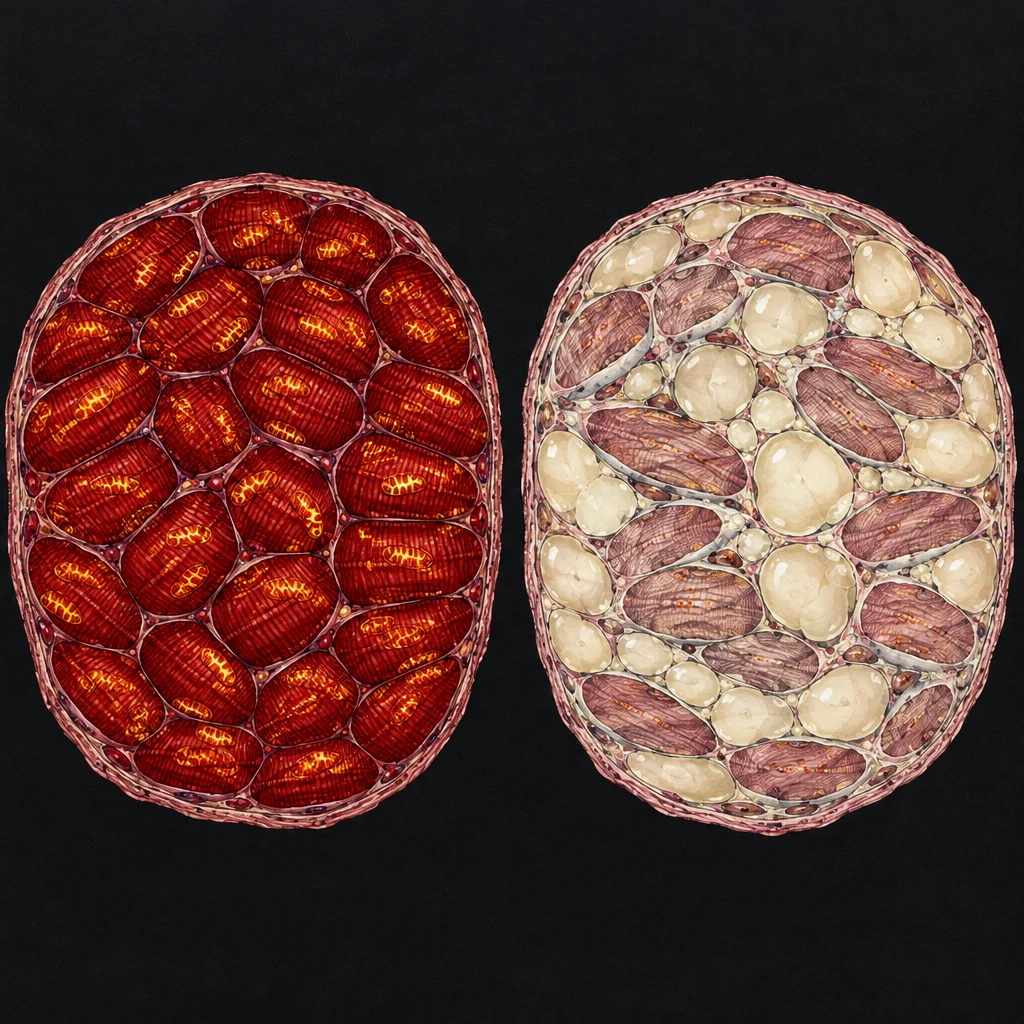
Most weight loss conversations focus on one number: how much the scale dropped. That makes sense. The scale is simple, it is right there, and it moves in a satisfying direction when things are going well.
But the scale cannot tell you what you actually lost. And for long-term success, that distinction matters more than most diets acknowledge.
What the scale is actually measuring
Your body weight is a sum of parts: fat, muscle, bone, water, and the contents of your digestive tract. When you lose weight, all of those can decrease. The goal of a fat-loss diet is to pull mostly from the fat portion. The problem is that the body does not automatically protect muscle when you eat less. Under certain conditions, it breaks muscle down for fuel instead.
This is not a flaw in your specific metabolism or a sign that you are doing something uniquely wrong. It is a predictable physiological response to calorie restriction, and it is worth understanding because it has real consequences.
Why muscle loss changes the equation
Muscle tissue uses energy just to exist. It is metabolically active, which means the more of it you carry, the more calories your body burns in the background each day, even at rest. When you lose a meaningful amount of muscle during a diet, your background calorie burn drops. The deficit that was producing progress a few months ago may no longer be enough to continue producing it.
This is one reason why people who have dieted multiple times often describe each attempt as feeling harder than the last. If previous diets pulled away muscle along with fat, the body they are returning to has a lower capacity for burning calories than it did before. The math shifts against them before they even start.
Protecting muscle during a diet is not about vanity or performance. It is about keeping your metabolism intact so that the weight you lose stays off more easily.
The two factors that protect muscle most reliably
Research in this area consistently points to two levers. Neither requires a gym membership or a dramatic lifestyle change. They work at walking-level activity and normal eating patterns, which is exactly where most sustainable diets live.
The first lever is protein intake. Muscle is made of protein. When you eat less overall, your body still needs amino acids to maintain its existing muscle tissue. If dietary protein is too low, the body starts pulling those amino acids from muscle itself. Keeping protein adequate while cutting total calories tells your body it does not need to cannibalize its own tissue to meet that demand.
A reasonable starting target for most adults is somewhere around 0.6 to 0.8 grams of protein per pound of body weight per day. This is a suggestion, not a prescription, and individual needs vary. But for practical purposes, this usually means protein appears at every meal rather than being concentrated in one sitting. Eggs at breakfast, a palm of chicken or legumes at lunch, fish or Greek yogurt at dinner. It does not have to be complicated.
The second lever is resistance to muscle breakdown through movement. You do not need heavy lifting to get this effect, though lifting helps. Even bodyweight movements, resistance bands, or carrying groceries up stairs sends a signal that your muscles are still being used and are worth keeping. The body tends to preserve what it perceives as necessary. Consistent low-level movement that requires your muscles to work against some load, even modest load, contributes to that signal.
Walking alone, while genuinely valuable for cardiovascular health and calorie balance, does not strongly activate this muscle-preservation signal. Adding a few minutes of bodyweight exercises a few times per week, even squats, lunges, or push-ups from a wall, shifts the balance in your favor.
What happens when you ignore this
A diet that produces rapid weight loss but sacrifices significant muscle will often look successful on the scale and feel less successful in the body. Energy drops. The rate of loss slows or stalls even without changes to eating. Maintaining the new lower weight requires eating less than it should, because the body that got there is less metabolically active than the body that started.
None of this is permanent or irreversible. Muscle can be rebuilt. But rebuilding it takes longer than losing it, and it is considerably easier to protect muscle during a deficit than to rebuild it afterward.
A practical way to think about food quality here
When you are choosing what to eat in a calorie deficit, protein density per calorie becomes a useful lens. Foods that deliver a lot of protein relative to their calorie cost let you hit your protein target without crowding out your calorie budget.
For example, non-fat Greek yogurt, eggs, canned tuna, lentils, cottage cheese, and chicken breast are all relatively high in protein per calorie. This does not mean you should only eat those things. It means that anchoring a meal around one of them makes it easier to protect muscle without eating more overall.
Some people find that simply asking the question, "where is the protein in this meal," before eating changes their choices gradually over time, without strict tracking or complicated rules.
How to check if your approach is protecting muscle
The scale cannot tell you this directly, but a few informal signals can. If you are losing weight steadily and your energy is holding up, your strength on everyday tasks feels similar, and you are not experiencing unusual fatigue, those are reasonable signs that muscle loss is limited. If the scale drops quickly but you feel weaker, more fatigued, and increasingly cold, those are signals worth taking seriously and often point to protein being too low or the deficit being too aggressive.
Slowing a diet down slightly and increasing protein when those signals appear is usually more effective than pushing harder through them.
The bottom line
Fat loss and weight loss are not the same thing. The goal worth optimizing for is losing fat while keeping as much muscle as possible, because that outcome produces a body that maintains itself more easily afterward. Two habits move that needle most reliably: keeping protein consistent at every meal, and doing some form of resistance-based movement a few times per week, even at a modest level. Neither requires perfection. Both compound over time.