Why the Cooking Method You Choose Changes How Much Usable Energy Your Body Actually Gets From a Meal
The same food prepared two different ways can deliver meaningfully different amounts of digestible calories, affecting hunger and fat loss in ways ingredient lists never reveal.
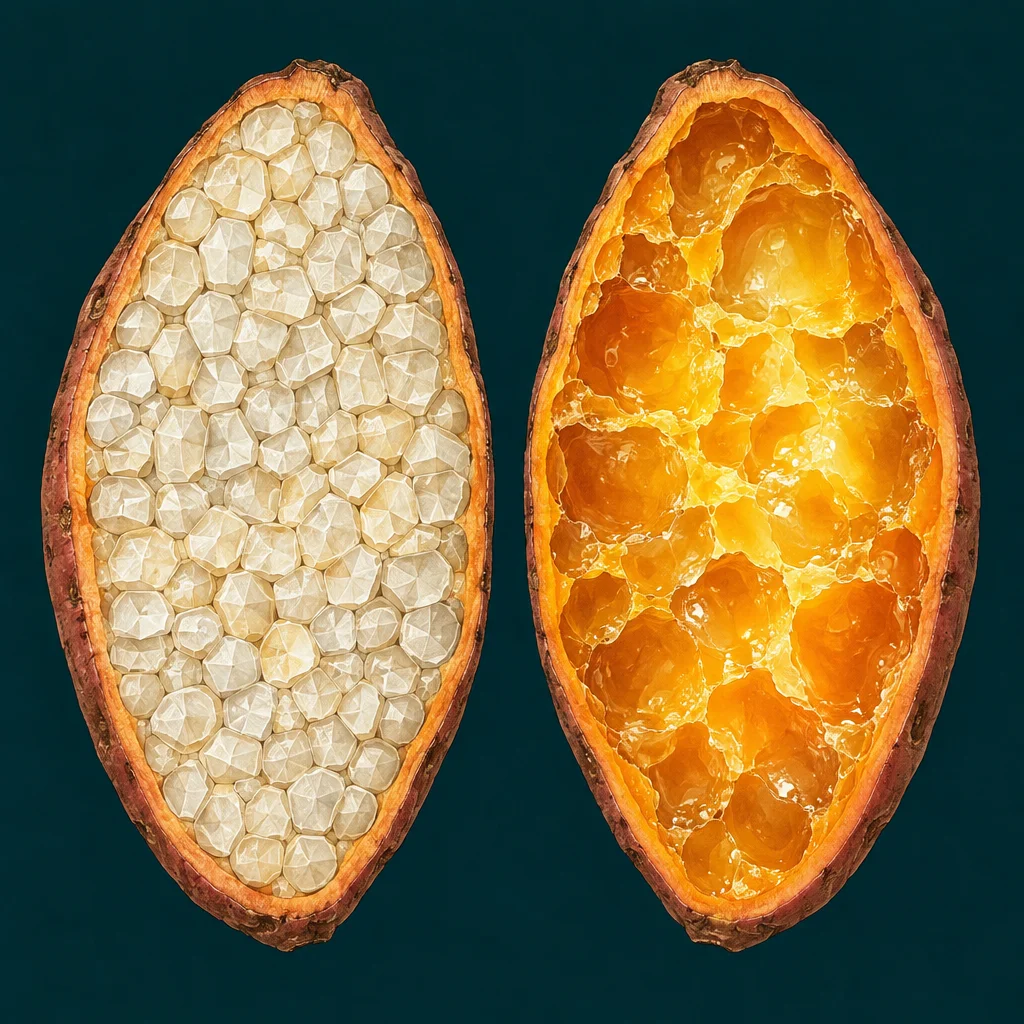
Most calorie counts assume a tidy, settled world where a hundred grams of chicken is a hundred grams of chicken, full stop. But your digestive system does not read nutrition labels. It responds to the physical structure of food as it arrives, and that structure changes significantly depending on how the food was prepared before it reached your plate.
This is not a loophole or a trick. It is straightforward biology, and understanding it helps you make smarter choices without obsessing over numbers.
Why Food Structure Matters to Digestion
Your gut extracts energy by breaking food down into absorbable units. How thoroughly it can do that job depends partly on how accessible the food's molecules are to begin with. Cooking, grinding, and other forms of processing essentially pre-digest food by disrupting cell walls, denaturing proteins, and gelatinizing starches, making it easier for digestive enzymes to get in and do their work.
When food arrives in a more intact, less processed form, your body has to expend more effort to extract calories from it, and it often does not extract all of them. Some pass through and leave. This effect is real, though it varies by food type and is rarely large enough to single-handedly determine your results. What it does do is quietly tip the balance in ways that compound over weeks of consistent eating.
Starches: Cooked, Cooled, and Reheated
Cooked starches are a good place to start because the differences are measurable and practical.
When you cook a starchy food like rice, potatoes, or pasta, the heat causes the starch granules to swell and become easier to digest. Your body can absorb that energy quickly. If you then cool the food in the refrigerator overnight, something useful happens: some of those starches restructure into a form called resistant starch, which your small intestine cannot break down. It passes to your large intestine instead, where gut bacteria ferment it. The calorie delivery to your bloodstream is lower, and the fermentation byproducts support a gut environment associated with better appetite regulation.
Reheating the food converts some resistant starch back again, but not all of it. Cold potato salad, chilled rice in a grain bowl, or leftover pasta eaten cool still contains more resistant starch than the freshly cooked version did. If you already eat these foods regularly, preparing them ahead and serving them cool or lightly reheated is a simple adjustment with no trade-off in cost or effort.
Protein: Raw Versus Cooked, and How Done Is Done
Protein behaves differently from starch. Cooking generally makes protein easier to digest by unfolding the tight molecular structures that enzymes would otherwise struggle to access. A well-cooked egg delivers more usable protein than a raw egg. Lightly cooked meat is digested somewhat differently than very well-done meat, though for practical fat loss purposes the differences within normal cooking ranges are modest.
What matters more with protein is the form it arrives in. Whole food protein sources, like a chicken breast or a boiled egg, require more digestive work and tend to keep you fuller longer than the same grams of protein blended into a smoothie or eaten as a processed bar. The liquid or heavily processed form digests faster, which is useful for recovery after hard exercise but less useful if your goal is sustained fullness across a long afternoon.
For most adults trying to lose weight through diet and walking, choosing intact protein sources at meals, rather than heavily processed ones, is worth the small amount of planning it takes.
Vegetables: How Cooking Affects Fiber and Fullness
Raw vegetables tend to deliver fewer digestible calories per gram than cooked ones because intact plant cell walls resist breakdown. Cooking softens those walls, releasing more of the cell's contents for absorption. This does not mean you should stop cooking vegetables, because cooking also improves palatability significantly and palatability is what determines whether you actually eat them. A vegetable you enjoy eating cooked beats a raw vegetable you push to the side every time.
The practical takeaway is simpler: a large bowl of raw leafy greens will add less to your calorie total than the same weight of roasted vegetables, because the raw version is mostly water and fiber your body cannot fully extract. Including some raw vegetables alongside cooked ones gives you volume, fiber, and something that takes time to chew, all of which support fullness signals.
Grinding and Blending: When Convenience Has a Cost
Blending or grinding breaks food into tiny particles that are much easier to digest quickly. A smoothie made from fruit, oats, and nut butter is digested noticeably faster than the same ingredients eaten whole. Blood sugar tends to rise faster, and fullness signals, which depend partly on how long food stays in your stomach, tend to fade sooner.
This is not a reason to avoid smoothies entirely. They are genuinely useful when you need a fast meal. It is a reason to understand that a blended meal and a whole-food meal of identical ingredients behave differently in your body, and to choose deliberately based on what you actually need from that meal.
If a smoothie is your breakfast and you find yourself hungry again within an hour, switching to the whole-food version of the same ingredients is a reasonable experiment before concluding breakfast just does not work for you.
A Few Practical Adjustments Worth Trying
You do not need to overhaul your kitchen to apply any of this. A few targeted shifts can make a real difference over time.
Cook grains and potatoes ahead of time, refrigerate them overnight, and use them in meals the next day. This takes no extra effort if you are already batch cooking, and it quietly changes how those foods behave in your body.
Favor whole food protein sources at meals over protein bars or shakes when you have the option and want to stay fuller longer.
Include something raw and crunchy alongside cooked foods at meals. It adds volume, extends eating time, and contributes fiber without adding many digestible calories.
When you blend, consider what you are trading. Convenience is real and sometimes the right choice. Just recognize that a blended meal will likely leave you hungry sooner than its whole-food counterpart would.
None of this requires weighing food differently or adopting a new diet framework. It is about understanding that preparation is part of what you are eating, not just the ingredient itself. Small, consistent adjustments to how you prepare food add up across weeks in ways that complement every other sensible habit you are already building.