Why Sleep Deprivation Hits Your Diet Harder Than a Bad Meal
Poor sleep triggers three specific hormonal and neurological changes that directly increase calorie intake and fat storage—and understanding exactly which mechanisms are responsible points to concrete adjustments that protect your weight-loss progress without overhauling your entire life.
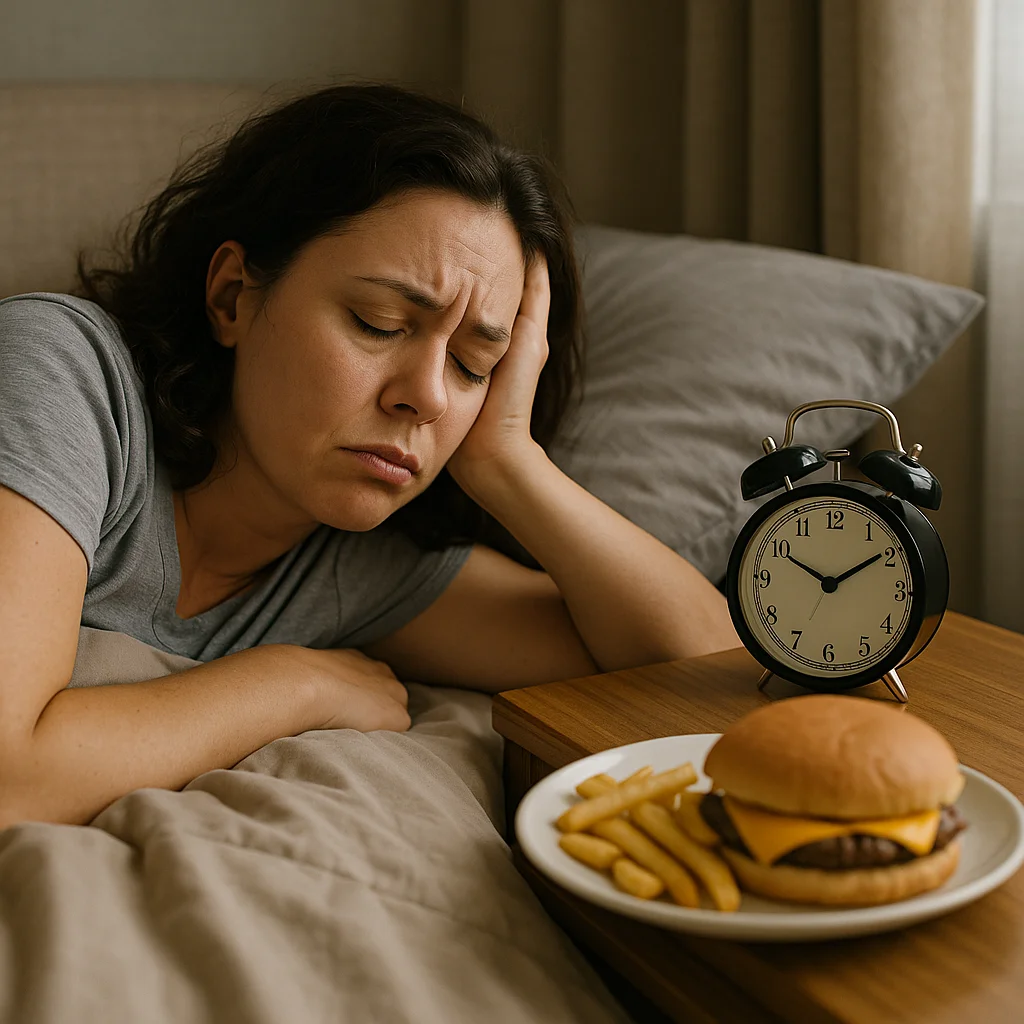
Most people trying to lose weight track their food carefully and plan their walks. Almost nobody tracks their sleep with the same seriousness. That's a significant strategic error—because the research on sleep and weight loss is not vague or speculative. It points to specific, measurable biological events that happen when you're underslept, and those events work directly against everything you're doing at the dinner table.
This isn't about feeling tired and reaching for donuts, though that happens too. The mechanisms run deeper.
Mechanism 1: Ghrelin and Leptin Shift Against You
Your appetite is regulated by two hormones that function as a push-pull system. Ghrelin signals hunger. Leptin signals fullness. When you get adequate sleep—roughly seven to nine hours for most adults—these hormones stay in a workable balance.
When you cut sleep short, even by ninety minutes for a few nights, that balance breaks. Studies using controlled sleep restriction find that ghrelin rises and leptin falls in the same subjects eating the same diet. The practical result: you feel meaningfully hungrier throughout the day and your fullness signals are blunted, so meals that would normally satisfy you stop doing their job.
One frequently cited trial from the University of Chicago found that participants sleeping 5.5 hours per night consumed roughly 300 more calories daily than when sleeping 8.5 hours—without any other change in their circumstances. Across a week, that gap erases most of a typical dieter's calorie deficit. Across a month, it can stall fat loss almost entirely.
Three hundred calories is not a small rounding error. It's a meaningful portion of most people's daily deficit.
Mechanism 2: Your Brain's Reward System Overweights Food
The second mechanism is neurological rather than hormonal, and it operates independently of the first.
Sleep restriction increases activity in the reward-processing centers of the brain—particularly areas associated with hedonic eating, meaning eating for pleasure rather than hunger. At the same time, the prefrontal cortex, which handles impulse control and longer-term thinking, shows reduced activity. You get more pull toward high-calorie, high-fat foods, and less braking capacity to resist them.
This has been measured directly in imaging studies. Underslept subjects don't just feel hungrier—they're neurologically primed to pursue specific types of food (dense, palatable, energy-rich) with less cognitive resistance than usual. The foods that get harder to say no to when you're tired are precisely the foods that do the most damage to a calorie deficit.
This is not a character flaw. It is a predictable, documented shift in how your brain processes food signals under sleep pressure. Understanding that distinction matters because it changes what you do about it.
Mechanism 3: Cortisol Rises and Fat Storage Shifts
The third mechanism involves cortisol, your primary stress hormone. Sleep deprivation is a physiological stressor, and your body responds to it the same way it responds to other stressors: by elevating cortisol.
Cortisol does several things relevant to fat loss. It raises blood glucose by promoting glycogen breakdown and gluconeogenesis, which in turn stimulates insulin release. Chronically elevated insulin in a context of calorie surplus—and remember, mechanisms one and two are already pushing you toward a surplus—promotes fat storage, particularly visceral fat around the abdomen.
Cortisol also degrades lean muscle tissue over time, which matters because muscle is metabolically active. Less muscle means a lower resting calorie burn. The combination of increased storage signaling and reduced resting burn is a meaningful double disadvantage for anyone trying to lose fat.
The relationship isn't linear—one bad night won't noticeably shift your body composition—but chronic mild sleep deprivation, which describes a large fraction of working adults, sustains cortisol at levels that produce measurable changes over weeks and months.
What to Actually Do About It
The good news is that the interventions here are not complicated, even if they require some deliberate adjustment.
Anchor your wake time first. Sleep research consistently shows that a fixed wake time is more effective than a fixed bedtime for stabilizing sleep quality and duration. Pick a wake time you can hold seven days a week and keep it. Bedtime will gradually regulate itself around it.
Treat your pre-sleep window the way you treat your pre-meal window. You probably already think about what you eat before bed. Apply the same intentionality to light and temperature. Bright overhead lighting and screens in the ninety minutes before bed suppress melatonin in a way that shortens sleep duration and fragments sleep architecture. Dimmer light and cooler room temperature (most sleep researchers point to 65–68°F as a useful range) move the biology in the right direction without requiring supplements or special equipment.
When sleep was genuinely short, compensate forward—not backward. If you slept five hours and you know mechanisms one and two are now active, the useful response is to front-load protein at breakfast and lunch. Protein has the strongest satiety signal per calorie of any macronutrient, and eating it early in the day creates a hormonal environment that partially offsets the ghrelin-leptin imbalance. You won't fully neutralize the effect, but you can meaningfully reduce how much extra you eat without relying on willpower that the prefrontal cortex isn't currently providing.
Don't respond to a bad night with restriction. This is a common but counterproductive pattern. Eating significantly less after poor sleep puts you in a cortisol-elevated, calorie-restricted state that preferentially breaks down muscle rather than fat. A rough night calls for normal eating and an early bedtime—not punishing the day after.
The Bottom Line
Sleep isn't a lifestyle bonus that speeds up weight loss at the margins. It's a core regulating system for appetite hormones, food-reward neurology, and fat-storage signaling. Running that system chronically short is roughly equivalent to introducing a slow, quiet leak in your diet—one that doesn't show up on any food log but gradually drains the deficit you're working to maintain.
Seven to nine hours isn't a luxury recommendation. For most adults trying to lose weight, it's close to a biological requirement for the other strategies to work as intended.
Fix the sleep, and the food choices often get meaningfully easier on their own.