Why Protein Targets Feel Impossible to Hit—and the Simple Math That Fixes It
Most dieters chronically undereat protein not because they lack discipline but because they front-load carbohydrates at breakfast and lunch, and shifting just two meals to hit a specific gram target eliminates the evening hunger and muscle loss that quietly sabotage fat loss.
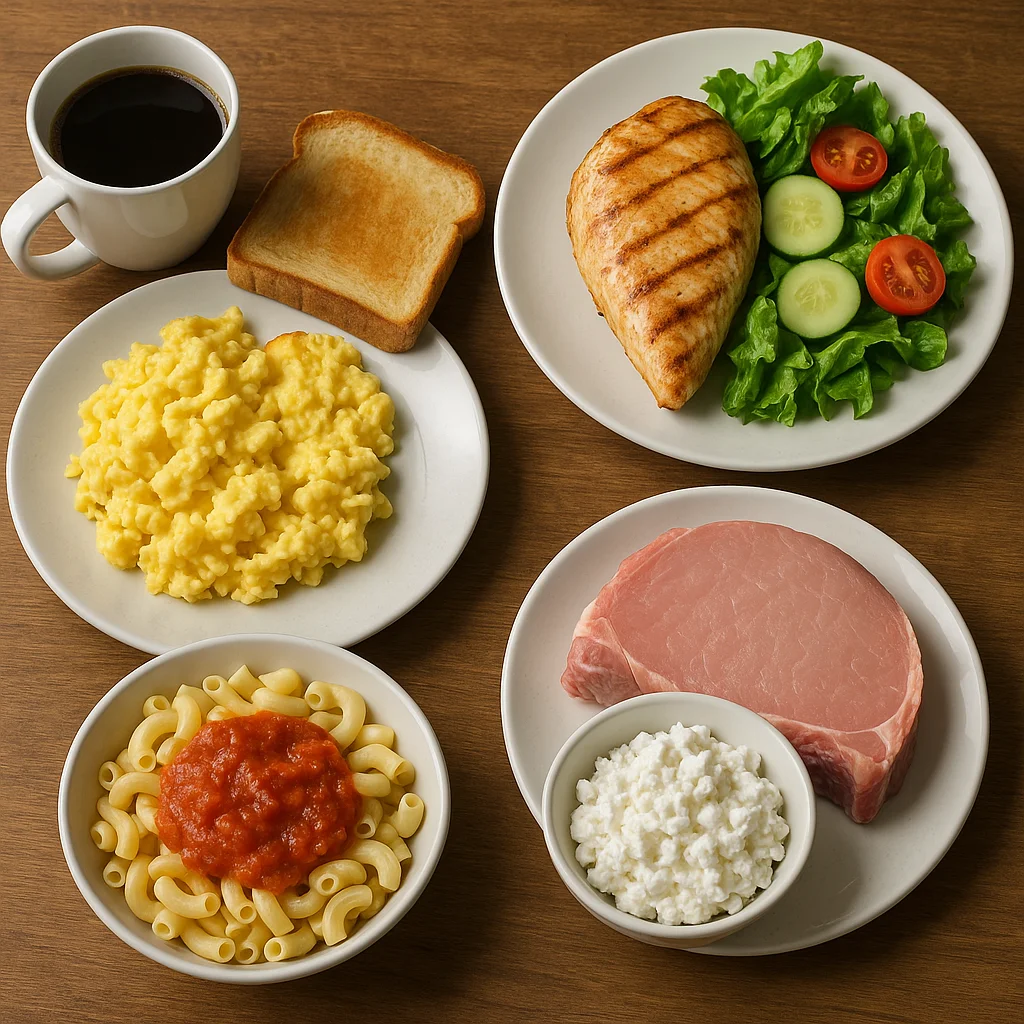
Protein is probably the most consistently supported dietary lever in weight-loss research. It costs more calories to digest than carbohydrates or fat, it preserves lean muscle during a calorie deficit, and it suppresses ghrelin—the hormone that signals hunger—more reliably than the other two macronutrients. Most people nod along to this. Most people are still not eating enough of it.
The gap between knowing and doing has a specific cause, and it is not willpower.
The Carbohydrate Front-Load Problem
Look at a typical day for someone actively trying to eat well. Breakfast is oatmeal, a banana, and orange juice—or a yogurt parfait with granola. Lunch is a grain bowl or a sandwich with a small piece of chicken. By the time dinner arrives, that person has consumed maybe 30–45 grams of protein across two meals and snacks, against a body that needs significantly more to support fat loss.
The math is harsh. A 160-pound person trying to lose weight needs roughly 100–130 grams of protein per day to preserve muscle mass during a calorie deficit—a range supported by multiple controlled trials examining nitrogen balance and body composition. If 35 grams landed before dinner, dinner needs to deliver 65–95 grams alone. That is not realistic from a single meal. So the day closes with a protein shortfall, and the body responds predictably: evening hunger spikes, muscle preservation suffers, and resting metabolism edges downward over weeks as lean tissue is quietly cannibalized alongside fat.
The root problem is structural, not motivational. The first two meals of the day are built around carbohydrates because that is how most convenient, affordable, culturally familiar foods are organized. Fixing it requires restructuring the architecture of those meals—not just adding a scoop of protein powder to something and calling it solved.
The Target Worth Aiming For
Before restructuring, it helps to know your actual number. A straightforward working target for adults in a calorie deficit: 0.7 to 1.0 grams of protein per pound of body weight per day. At 150 pounds, that is 105–150 grams. At 180 pounds, 126–180 grams.
If those numbers feel unachievable, you are not unusual. Studies tracking self-reported dietary intake consistently find that adults attempting weight loss average 55–75 grams of protein daily—roughly half what body-composition research suggests is optimal during a deficit. The shortfall is the norm, not the exception.
The fix is distributing that target across the day rather than leaving it to dinner.
Two Meals to Restructure
Breakfast is the highest-leverage swap. A standard carbohydrate-forward breakfast—oatmeal, toast, cereal, fruit—delivers 5–10 grams of protein on a good day. Replacing it or augmenting it with a protein anchor changes the entire hormonal trajectory of the morning.
Concrete anchors that require minimal effort: - Three eggs (18 g) with one slice of whole-grain toast instead of two - Greek yogurt, plain and full-fat, 200g (17–20 g depending on brand) with a small handful of nuts - Cottage cheese, half a cup (14 g) with fruit if you want sweetness - Two eggs plus two strips of turkey bacon (roughly 22 g combined)
None of these require cooking talent. All of them shift breakfast protein from the single digits to 15–22 grams. Research on morning protein intake specifically shows that higher-protein breakfasts reduce total calorie intake at lunch by measurable amounts—one frequently cited controlled trial found a difference of roughly 175 calories at the next meal, driven by more stable ghrelin suppression through mid-morning.
Lunch is the second lever. The classic salad or grain bowl often has more volume than protein. A grain bowl with roasted vegetables, chickpeas, and a drizzle of tahini might feel substantial and healthy—and it often tops out around 15–18 grams of protein while delivering 500–650 calories primarily from carbohydrates and fat. That combination sets up the blood sugar and hunger cycle that hits around 3 p.m.
Adding a deliberate protein anchor to lunch—not replacing the meal, just anchoring it—moves the needle without requiring you to eat less: - Four ounces of canned tuna or salmon (25–28 g) - Half a cup of edamame added to any bowl (9 g, plus fiber that slows digestion) - Two tablespoons of hemp seeds mixed into anything (6 g, plus omega-3s) - A palm-sized portion of grilled chicken, rotisserie chicken, or deli turkey as a deliberate addition
The target for breakfast plus lunch combined: aim for 50–65 grams of protein before 2 p.m. That leaves dinner needing to deliver 40–80 grams depending on your total target—a range that is achievable from a single protein-centered meal without heroics.
What Changes When the Distribution Shifts
The benefits are not subtle and they are not slow. Within the first week of distributing protein more evenly across the day, most people report two concrete changes: afternoon energy is more stable, and evening hunger—the kind that sends you to the kitchen at 9 p.m.—decreases noticeably. This is not placebo. It reflects ghrelin responding to sustained amino acid availability rather than spiking into a protein-starved gap.
The longer-term effect matters more for fat loss. When protein is insufficient during a calorie deficit, roughly 25–35% of the weight lost comes from lean mass rather than fat—a figure documented in metabolic ward studies. Lean mass loss lowers resting metabolic rate, which shrinks the calorie deficit, which is one concrete mechanism behind the plateau that frustrates most dieters several months in. Adequate protein, distributed throughout the day, shifts that ratio toward fat loss and protects the muscle that keeps your metabolism running at its current rate.
A Realistic Starting Point
Do not try to overhaul every meal at once. Pick breakfast first. Audit what you currently eat before noon and estimate the protein honestly—most people are shocked by how low the number is. Swap in one protein anchor per meal for one week. Check the evening hunger. Adjust from there.
The goal is not perfection. A day that lands at 90 grams of protein distributed across three meals will produce better body composition outcomes than a day that hits 130 grams but crammed all of it into a late dinner after running low all day.
You do not need a supplement stack. You need better-structured meals before 2 p.m. The rest tends to follow.