The Hidden Weight of What You Drink: How Liquid Calories Quietly Undo a Solid Diet
Liquid calories are uniquely invisible to the brain's satiety system, and understanding exactly why—plus knowing which drinks are the worst offenders—gives you a concrete, low-effort lever for breaking a stall.
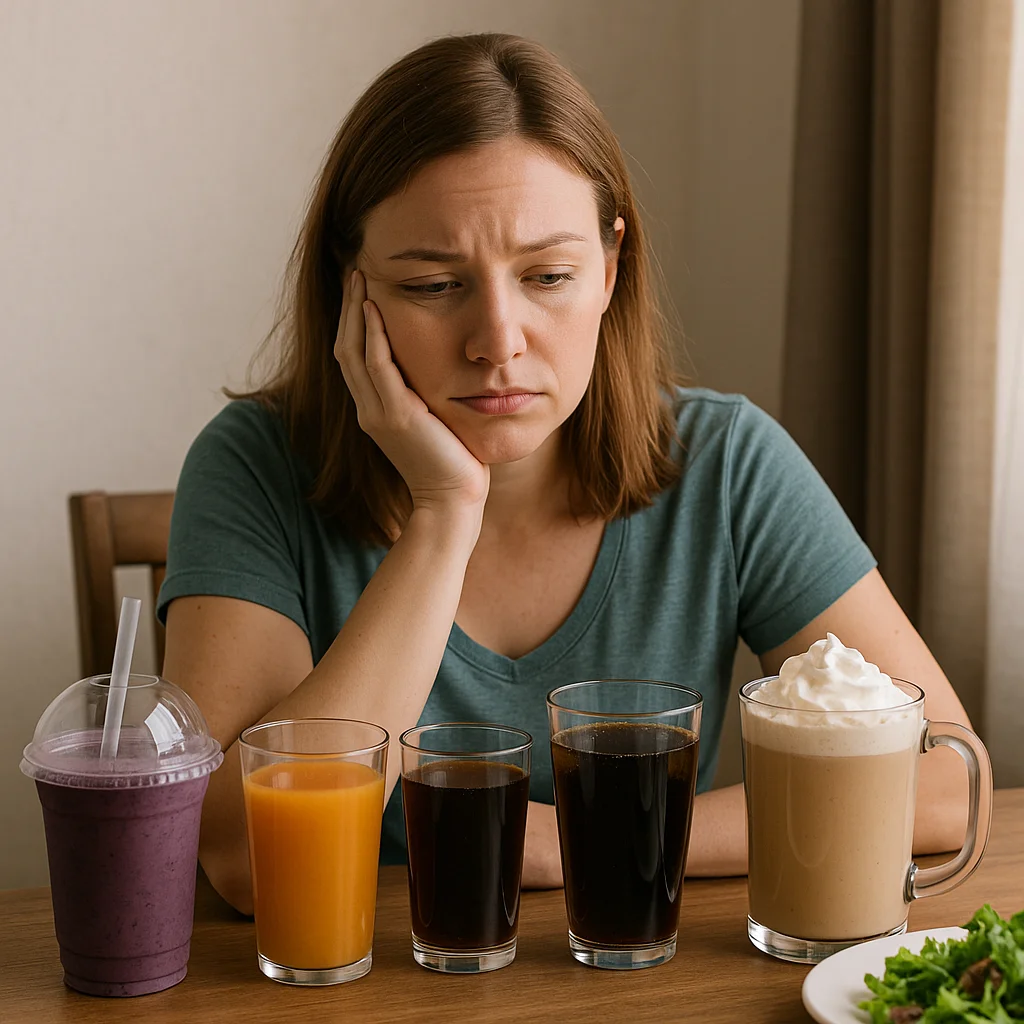
If you've been eating carefully, logging your food, and still not losing weight, there's a good chance the problem isn't on your plate. It's in your glass.
Liquid calories are one of the most reliably underestimated contributors to a stalled diet—not because people don't know drinks have calories, but because the brain literally processes them differently than solid food. This isn't a metaphor. It's measurable physiology, and it has real consequences for your appetite and your scale.
Why Drinks Don't Register the Way Food Does
When you eat solid food, your stomach physically stretches. That stretch activates mechanoreceptors in the stomach wall, which send satiety signals to the brain. Chewing also plays a role—the act of mastication appears to trigger early hormonal responses that prime your body to register fullness.
Liquids bypass most of this. They move through the stomach faster, create less mechanical stretch, and require no chewing. The result: a 300-calorie smoothie does almost nothing to reduce how hungry you feel at your next meal, while 300 calories of chicken and roasted vegetables would measurably blunt that same hunger.
Researchers have tested this directly. Studies comparing equal-calorie liquid and solid versions of the same meal consistently find that people eat more at subsequent meals after the liquid version—often enough to fully cancel out any calorie difference between conditions. Your body doesn't compensate for liquid calories the way it does for solid ones.
The Biggest Offenders (and Why They're So Easy to Miss)
Coffee drinks. A plain black coffee has essentially no calories. A medium oat milk latte with a pump of syrup can hit 250–350 calories—and because it feels like a morning ritual rather than a meal, it rarely gets counted. People who drink two of these daily can be consuming 500–700 untracked calories before they've eaten a single bite of food.
"Healthy" smoothies and juices. This is where the health halo does the most damage. A homemade green smoothie with banana, almond butter, oat milk, protein powder, and frozen fruit can easily land at 500–600 calories. Fruit juice—even 100% juice with no added sugar—removes the fiber that made the original fruit satiating and delivers a concentrated hit of fructose that raises blood sugar quickly and fades fast. Drinking two glasses of orange juice provides roughly the same calories as three whole oranges, but you'll feel it for about a quarter of the time.
Alcohol. Alcohol contributes calories in two ways: the ethanol itself (7 calories per gram, second only to fat) and the mixers, chasers, or craft ingredients that often double the count. Two weekend glasses of wine add roughly 300 calories. A craft beer can run 200–300 per pint. But the more insidious effect is behavioral: alcohol lowers inhibition and disrupts the prefrontal decision-making that keeps late-night snacking in check. Research suggests that the extra food consumed after drinking often outweighs the caloric cost of the drinks themselves.
Sports and electrolyte drinks. These were engineered for athletes doing sustained, high-intensity exercise. A 20-ounce bottle of a popular sports drink contains around 140 calories and 34 grams of sugar. For someone walking 30 minutes and sipping one for hydration, that's a calorie-positive activity. Water works fine for exercise under 60 minutes at moderate intensity.
The Math Is Unforgiving
Here's a realistic scenario. An adult drinking one oat milk latte in the morning, one glass of juice at lunch, and two glasses of wine on Friday and Saturday evening is consuming roughly 700–900 extra calories per week—entirely from drinks they may not even register as "eating."
At a modest 200-calorie daily deficit, those liquid calories can silently erase four days of disciplined effort. This isn't a small rounding error. It's the entire mechanism of a plateau.
What to Do About It
Audit before you cut. Spend three days logging every drink that isn't plain water or black coffee or unsweetened tea. Include the splash of cream, the protein shake, the kombucha, the sports drink. Most people are genuinely surprised by the total. You can't manage what you haven't measured.
Apply the satiety swap test. Ask yourself: could I eat a small meal with the same calories and feel noticeably fuller? If yes, the drink is worth reconsidering—not eliminating, just accounting for honestly.
Keep the drinks you love, but right-size them. You don't have to give up lattes or wine. You do have to count them with the same precision you'd count a meal. A useful habit: log the drink first, before you make or order it, so the number is visible and real before you've already consumed it.
Favor volume and fiber when you're thirsty between meals. Sparkling water, plain water with citrus, unsweetened herbal tea, and black coffee all provide something to sip without a caloric cost. They also help with the habit loop—if part of what you're reaching for is the ritual of holding something and drinking, these satisfy that without the hidden calories.
Rebuild smoothies as meals, not extras. If smoothies are your preference, structure them deliberately—target protein (at least 25–30g), limit fruit to one serving, add fiber like chia or flaxseed, skip the juice base in favor of water or unsweetened plant milk—and account for them as a full meal, not a side drink alongside breakfast.
The Bottom Line
Your brain's hunger system evolved in a world without caloric beverages. It's not equipped to compensate for liquid calories the way it naturally compensates for food, which means every drink that carries significant calories represents a category where willpower is fighting biology.
The fix isn't deprivation. It's visibility. Most of the people who crack a long plateau by auditing their drinks aren't shocked that the drinks had calories—they're shocked by how many, and how completely they'd stopped registering them.
Start with three days of honest logging. The data will tell you where the leverage is.