The Hidden Weight of What You Drink: How Liquid Calories Behave Differently in Your Body
Liquid calories are processed through a fundamentally different physiological pathway than solid food—one that bypasses your brain's satiety signals almost entirely—and understanding this mechanism reveals why beverages may be the single most underestimated obstacle in an otherwise solid weight-loss plan.
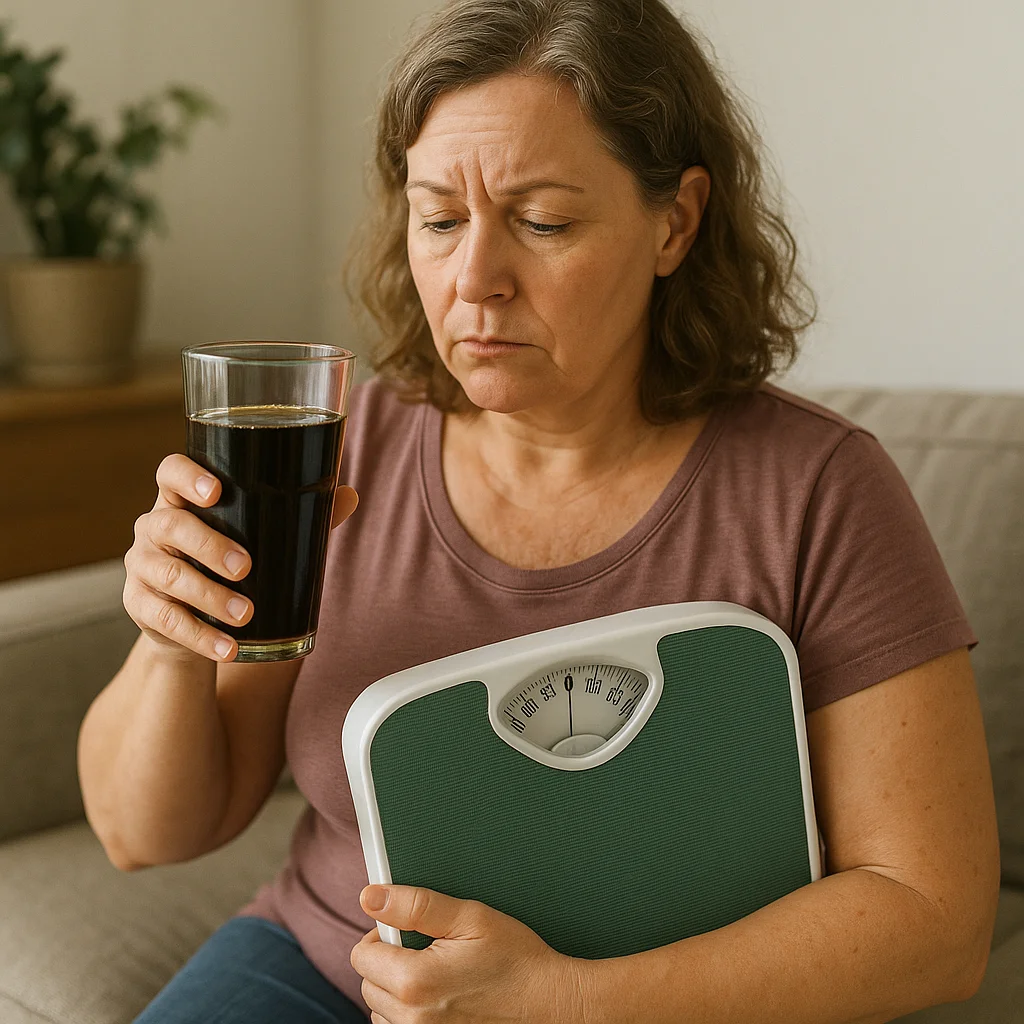
Most people who are serious about losing weight have already done the obvious things. They've cut the cookies, portioned the pasta, swapped the fries. But there's a category of calories that routinely escapes scrutiny—not because people are careless, but because the body itself treats it differently.
That category is what you drink.
Your Brain Doesn't Count Liquid Calories the Same Way
When you eat solid food, your body runs a fairly reliable accounting process. Chewing activates saliva enzymes. Food moves slowly through your stomach. Stretch receptors in the stomach wall send signals to your brain. Gut hormones—including cholecystokinin and peptide YY—rise in response to the physical presence of food. The result is a satiety signal that arrives roughly 15–20 minutes after eating and persists for hours.
Liquids largely skip this process. They move through your stomach in minutes. They don't meaningfully activate stretch receptors. And critically, multiple controlled studies have found that liquid calories produce significantly weaker satiety hormone responses than the same calories consumed in solid form.
A landmark study published in the American Journal of Clinical Nutrition gave participants either solid food, a thick beverage, or a thin beverage containing identical calories and macronutrients. The solid-food group ate meaningfully less at the next meal. The thin beverage group ate almost as much at the next meal as if they hadn't consumed anything at all.
The mechanism matters here: your brain doesn't simply count incoming calories. It reads physical and hormonal signals to decide whether you're fed. Liquid calories provide the energy without providing the signals.
The Beverages That Catch People Off Guard
Soda and juice are the obvious ones, and most weight-conscious adults already know to limit them. The underestimated offenders tend to be the drinks that carry a health halo.
Smoothies and blended drinks. Blending fruit breaks down cell walls and releases sugar more rapidly than chewing the same fruit whole. The fiber is still present, but research suggests the physical matrix that normally slows sugar absorption and promotes fullness is partially destroyed by the blending process. A smoothie made from two bananas, a cup of mango, and orange juice can deliver 400–500 calories with a glycemic impact meaningfully higher than eating those foods intact—and with considerably less satiety per calorie.
Coffee drinks. A plain black coffee has essentially no calories. A medium oat-milk latte with a flavored syrup can easily contain 250–350 calories. Consumed daily, that's a 1,750–2,450 calorie difference per week—enough to account for the loss of nearly a pound of fat per week, or to completely erase a moderate daily calorie deficit. Most people who drink these don't think of them as meals. Their brains agree, which is the problem.
Alcohol. Alcohol is calorie-dense at 7 calories per gram—nearly as dense as fat—and those calories come with no compensating satiety signal. More importantly, alcohol temporarily suppresses fat oxidation: when alcohol is in your system, your body prioritizes metabolizing it over burning stored fat. A modest two-drink evening doesn't just add calories; it pauses fat-burning for several hours.
Sports and electrolyte drinks. These have a legitimate use during sustained, high-intensity exercise. A 45-minute walk does not qualify. A standard sports drink consumed during a moderate walk can easily replace more calories than the walk burned.
What the Research Actually Recommends
The evidence here is consistent enough to act on without waiting for further studies.
Water remains the gold standard for hydration during weight loss. Not because it has magic properties, but because it contributes zero calories while genuinely supporting metabolic function—mild dehydration measurably slows resting metabolic rate, and thirst is frequently misread as hunger. Drinking water before a meal has been shown in controlled trials to reduce meal-size intake by roughly 13% in middle-aged adults.
Whole fruit outperforms blended or juiced fruit. If you enjoy smoothies, adding protein (Greek yogurt, a scoop of protein powder) and keeping portions to one serving of fruit substantially improves the satiety profile. Eating an apple rather than drinking apple juice is not a minor distinction—it's a meaningfully different physiological event.
If you drink alcohol, front-load awareness. Accounting for alcohol calories explicitly—not loosely—is worth doing. Two glasses of wine is approximately 250–300 calories. If that fits your weekly budget and you're tracking honestly, it doesn't need to be eliminated. But treating it as calorie-free because it doesn't feel like eating is where the math breaks down.
Black coffee and plain tea are genuinely useful. Caffeine has a modest, real effect on fat oxidation and can mildly suppress appetite in the short term. The problem is not the coffee—it's the additions. Transitioning high-calorie coffee drinks toward simpler versions is one of the highest-return dietary swaps available for the effort involved.
A Practical Audit Takes Ten Minutes
Write down every beverage you consumed yesterday, including estimated amounts. Assign honest calorie counts. Many people find 300–600 calories hiding in plain sight—calories their body never registered as food and never compensated for by eating less.
That's not a small finding. At the low end, 300 unregistered daily calories represents roughly 2,100 calories per week. That's the rough caloric equivalent of a pound of body fat every 12 days—either working against you or, once addressed, quietly working for you.
Weight loss doesn't require perfection. It does require an honest count. And an honest count has to include what's in the glass.